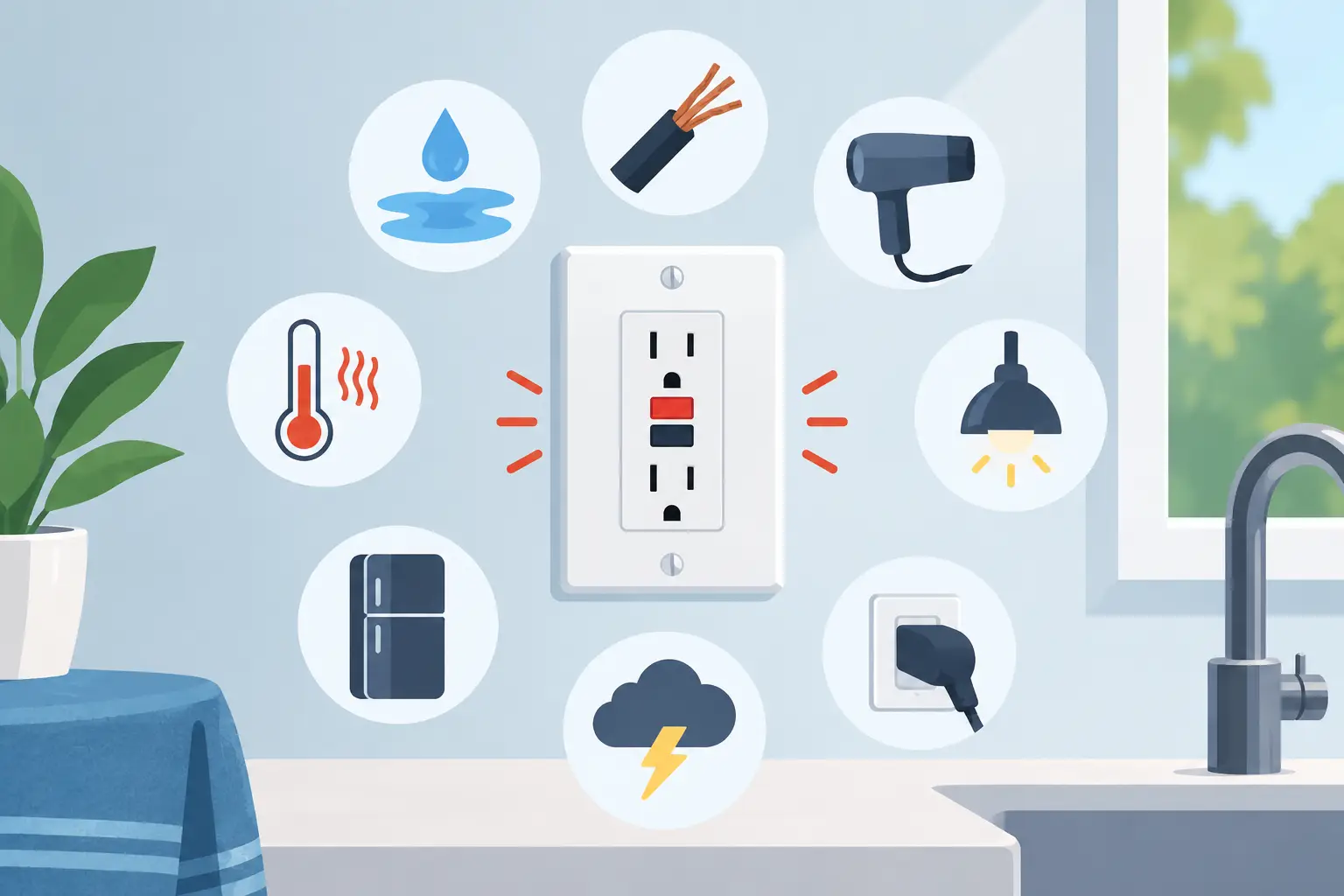
A bathroom outlet that suddenly will not reset can bring a normal morning to a stop. The question, “why does GFCI outlet trip,” usually has a reassuring answer: the device is doing the safety job it was designed to do. A GFCI, or ground-fault circuit interrupter, turns power off when it detects electricity taking an unintended path. The key is determining whether the trip came from moisture, a plugged-in appliance, a wiring problem, or a failing GFCI itself.
Why Does a GFCI Outlet Trip?
A GFCI constantly compares the electricity flowing out on the hot wire with the electricity returning on the neutral wire. Under normal conditions, those amounts match. If even a small amount of current leaks elsewhere – possibly through water, damaged insulation, an appliance casing, or a person – the GFCI trips quickly and cuts power.
That fast response is why GFCI protection is required in locations where moisture and grounded surfaces are more likely to be present. You will commonly find GFCI outlets in bathrooms, kitchens, garages, laundry areas, crawl spaces, unfinished basements, and outdoor locations. A GFCI may also protect other outlets farther down the same circuit, so the outlet that has lost power may not be the one with the reset button.
A trip is not automatically proof of a major electrical failure. It is, however, a signal worth taking seriously. Repeatedly resetting the outlet without finding the cause can expose people and property to the very hazard the device is meant to prevent.
The Most Common Reasons a GFCI Trips
1. Moisture has reached the outlet or connected equipment
Water and electricity do not need to meet in a dramatic way to create a problem. Humidity, rain blowing into an exterior cover, condensation, a damp garage, or a small leak under a sink can create enough leakage to trip GFCI protection.
Outdoor outlets are especially vulnerable after heavy weather. Pool and hot tub equipment, landscape lighting, and patio appliances also need careful attention because their cords, plugs, and connections live in damp environments. Do not reset an outlet that is visibly wet. Turn off power at the breaker if it is safe to do so, keep the area dry, and have the source of moisture addressed.
2. An appliance or cord has a ground fault
A GFCI outlet may be working properly while the item plugged into it is the problem. Common culprits include hair dryers, coffee makers, refrigerators, freezers, power tools, sump pumps, pressure washers, and aging outdoor equipment. A cracked cord jacket, worn plug, internal moisture, or failing heating element can allow electricity to leak to ground.
Start by unplugging everything from the affected outlet and any nearby outlets that may share the circuit. Then press RESET. If the GFCI holds, plug items back in one at a time. If it trips when a particular appliance is connected, stop using that item until it has been repaired or replaced. Do not assume a damaged cord is harmless just because the appliance still turns on.
3. Too many loads are on the circuit
An overloaded circuit more often trips the circuit breaker than the GFCI device, but the two issues can overlap. A garage circuit powering a refrigerator, freezer, battery charger, tools, and outdoor equipment may experience enough strain to reveal an appliance or wiring weakness.
If the breaker is tripping rather than the GFCI reset button popping out, overloading is more likely. If both are happening, an electrician should evaluate the circuit. The solution may be as simple as moving equipment to another circuit, or it may require a dedicated circuit for a larger appliance or specialized equipment.
4. The GFCI outlet is worn out or defective
GFCI outlets do not last forever. Internal components can wear down with age, repeated use, heat, corrosion, or electrical surges. A failing device might trip randomly, refuse to reset with nothing plugged in, or have a test button that does not work correctly.
Newer GFCIs often include indicator lights that show whether the device has tripped, needs replacement, or is not receiving power. Those lights are helpful, but they do not replace proper troubleshooting. An outlet that will not reset may have failed, but it may also be responding to a fault elsewhere on the circuit.
5. A downstream outlet or connection has a problem
One GFCI can protect several standard outlets connected to its load terminals. That arrangement is common in bathrooms, garages, and exterior areas. A loose wire, damaged receptacle, wet outlet cover, or pinched cable farther down the line can trip the GFCI at the first outlet.
This is one reason the cause can be difficult to spot. The GFCI may be located in one room while the actual problem is at an outlet on the opposite side of a wall, in a garage, or outdoors. A licensed electrician can test the circuit in sections and locate the fault without guessing or opening energized equipment unnecessarily.
6. Incorrect wiring is causing nuisance trips
A GFCI requires the hot and neutral conductors for the protected circuit to stay together. If a neutral wire is shared improperly with another circuit, connected to the wrong terminal, or tied into another neutral downstream, the GFCI can trip even when no appliance is plugged in.
This issue sometimes appears after remodeling, outlet replacement, DIY repairs, or panel work. It can also affect commercial spaces where circuits have been extended over time. Because diagnosing shared neutrals and incorrect line/load connections involves live electrical testing, this is work for a qualified electrician.
7. A breaker, panel, or circuit wiring issue is involved
When a GFCI will not reset, check whether the breaker serving that circuit has tripped. A breaker that appears to be on may be in a middle position. Move it firmly all the way off, then back on once. If it trips again, leave it off.
Damaged wiring, loose connections, rodent activity, nail or screw damage, and deteriorated insulation can all create faults that trigger protection. These problems may be hidden in walls, attics, crawl spaces, or junction boxes. Warning signs include a burning smell, warm or discolored outlet covers, buzzing, flickering lights, or a breaker that repeatedly trips. Treat any of those signs as an urgent reason to stop using the circuit.
8. The outlet is protecting equipment with a normal but incompatible electrical load
Some appliances, particularly those with motors, electronic controls, heating elements, or built-in filters, can create small amounts of electrical leakage during normal operation. Modern GFCIs are designed to handle expected conditions, but an aging appliance or certain equipment combinations may still cause repeated trips.
The answer is not to replace the GFCI with a standard outlet or defeat its protection. The safer approach is to identify the equipment, verify that the circuit is appropriate for it, and determine whether the appliance needs service or a dedicated electrical setup.
Safe Steps to Take Before Calling for Service
First, stop and look for obvious hazards. If there is standing water, a damaged cord, smoke, heat, a burning odor, or visible discoloration, do not touch the outlet or keep trying to reset it. Turn off the breaker if you can do so safely and arrange for professional help.
If there are no warning signs, unplug all connected devices. Press the TEST button on the GFCI, then press RESET. If it resets and stays on with nothing plugged in, reconnect devices one at a time. This simple process can identify an appliance-related issue without taking apart any electrical equipment.
If the reset button will not stay in, locate the electrical panel and check for a tripped breaker. Also look around the area for another GFCI outlet that may control the dead receptacle. Do not remove outlet covers, work on wiring, or replace a GFCI while the circuit is energized. A reset that immediately fails is useful information, not a problem to force.
When Repeated GFCI Trips Need an Electrician
Call a licensed electrician when a GFCI trips with nothing plugged in, trips repeatedly after rain or moisture exposure, will not reset after the breaker has been checked, or affects critical equipment such as a refrigerator, freezer, sump pump, pool system, or business equipment. You should also call promptly if the outlet feels warm, shows damage, or is part of a circuit with flickering lights or breaker trips.
A professional diagnosis should include more than swapping the outlet. The technician can inspect the GFCI, test connected outlets and wiring, evaluate the breaker and panel connections, and confirm that the circuit is wired correctly for its intended use. That approach resolves the cause rather than simply restoring power for a few hours.
For homeowners and property owners in San Antonio and South Texas, Jireh Electric can help trace recurring GFCI problems and explain the repair clearly before work begins. Until the source is found, let the GFCI stay tripped if it will not hold – losing power briefly is far safer than bypassing the protection designed to prevent shock.