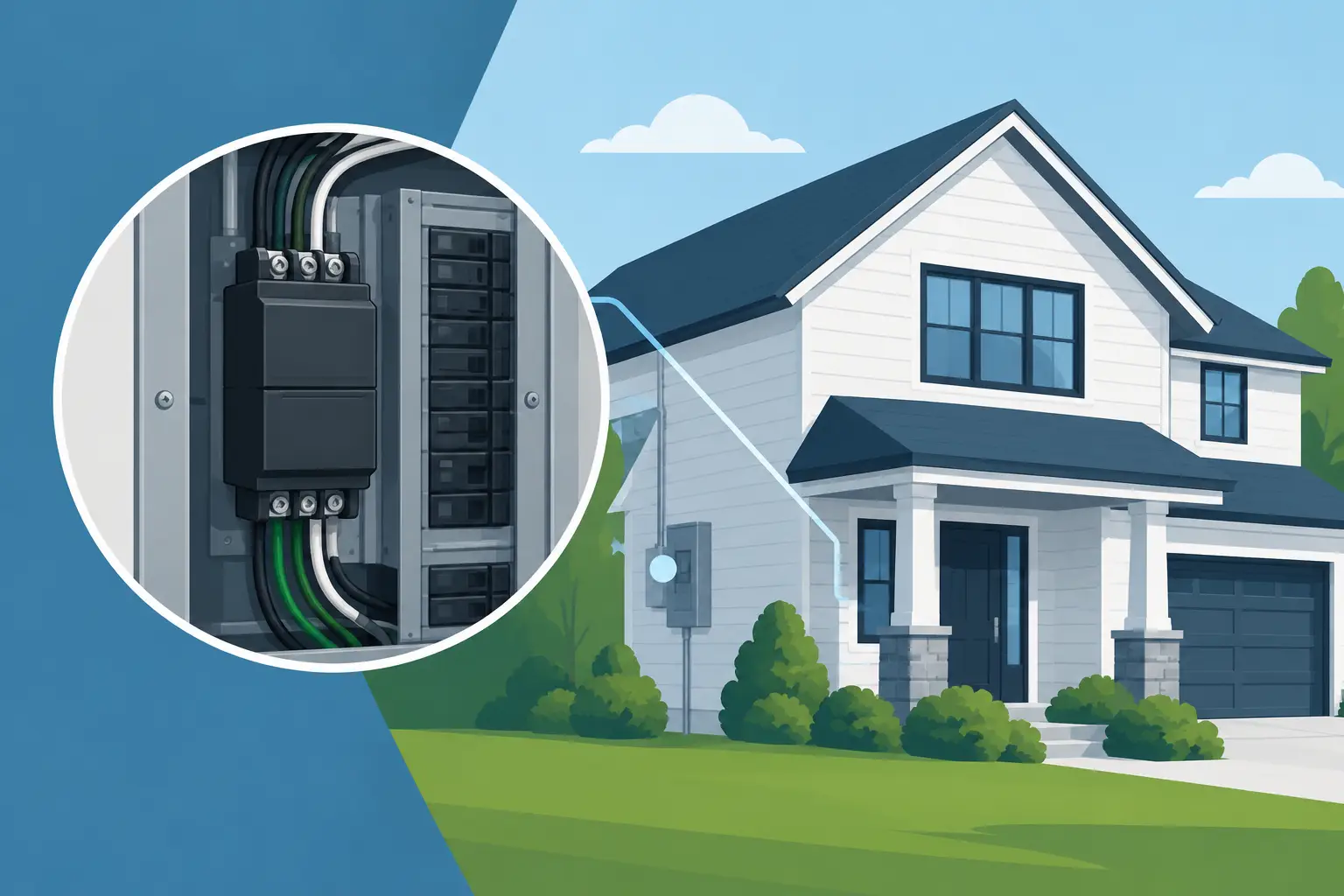
A lightning storm does not have to strike your roof to damage the electronics inside it. A surge can enter through the electrical service, travel through branch circuits, and shorten the life of equipment throughout the building. Professional whole house surge protector installation gives that energy a controlled path to ground before it reaches the devices your family or business depends on.
For San Antonio and South Texas property owners, surge protection is a practical upgrade. Summer thunderstorms, utility disturbances, and the growing number of sensitive electronic controls in modern homes all make it worth considering. The right installation protects more than televisions and computers. It can help protect appliances, HVAC controls, garage-door openers, smart-home equipment, networking gear, and other hardwired systems.
What a whole-house surge protector does
A whole-house surge protective device, often called an SPD, is installed at or near the main electrical panel. Under normal conditions, it stays in the background. When a voltage spike occurs, the device responds by diverting excess electrical energy safely toward the grounding system.
Surges come in different sizes. A nearby lightning event can create a powerful spike, but many damaging surges are smaller and happen more often. Utility switching, power restoration after an outage, large motors cycling on and off, and faults on the electrical system can all contribute. Those repeated smaller events may not cause a dramatic failure in the moment, but they can slowly wear down circuit boards and electronic components.
That is why surge protection is not only about the rare severe event. It is also about reducing the everyday electrical stress that expensive equipment can experience over time.
What it can and cannot protect
A properly selected and installed whole-home device provides a first line of defense for equipment connected to the electrical panel. That includes hardwired equipment that cannot be protected with a plug-in strip, such as an air-conditioning condenser, electric range, built-in microwave, well equipment, and certain lighting or automation systems.
Still, no surge protector can promise that every piece of electronics will survive every electrical event. A direct lightning strike or severe electrical fault can exceed the capacity of any residential protective device. Surge protection also does not correct low voltage, persistent flickering, overloaded circuits, poor wiring connections, or a failing panel.
For especially valuable or sensitive electronics, layered protection is the better approach. A whole-house unit handles surges arriving at the service entrance, while quality point-of-use protection can provide an additional layer for computers, entertainment systems, and networking equipment. Devices connected to cable, phone, antenna, or data lines may need protection at those entry points as well.
Why the electrical panel matters
The panel is not just a convenient location. It is central to how well a surge protective device performs. Protection works best when the SPD has a short, direct connection to the electrical system and a sound grounding and bonding system.
During an evaluation, a qualified electrician will look at the panel’s available space, breaker configuration, service capacity, condition, grounding, and signs of overheating or corrosion. In some homes, the panel is in good condition and ready for an SPD. In others, the safest recommendation may be to address panel concerns first.
Older homes deserve particular attention. An outdated panel, inadequate grounding, loose connections, or previous unpermitted alterations can limit the effectiveness of a new protective device. Installing equipment without checking these fundamentals may create a false sense of security. A careful assessment makes sure the upgrade is matched to the actual condition of the home.
Whole house surge protector installation: what the work involves
Whole house surge protector installation is electrical panel work, not a plug-and-play project. It generally requires opening the panel, working around energized service equipment, selecting an appropriately rated device, and connecting it according to manufacturer instructions and local electrical requirements.
The process begins with a conversation about what you want to protect and any electrical issues you have noticed. If a property has experienced repeated outages, lightning-related damage, unexplained appliance failures, or frequent breaker concerns, those details help guide the inspection.
An electrician then determines whether the best option is a Type 1 device installed on the line side of the service equipment, a Type 2 device connected on the load side at the main panel, or protection at an appropriate subpanel. The right choice depends on the building’s electrical layout and the product’s listing and installation requirements. It is not simply a matter of choosing the largest number on a package.
Once the location and equipment are confirmed, the electrician installs the device with the proper overcurrent protection if required, keeps lead conductors as short and straight as practical, verifies grounding and bonding, restores power, and checks the system. Many units include an indicator light or status display. Homeowners should know where that indicator is and what it means, because an SPD can sacrifice itself after a significant surge and may need replacement.
Choosing a device that fits the property
Surge protective devices are not all interchangeable. The right selection depends on the service type, panel arrangement, available breaker space, and the electrical loads in the building. A home with standard appliances has different needs than a property with a generator, pool equipment, EV charging, a detached workshop, or extensive smart-home controls.
A few specifications help electricians compare devices. Surge current capacity describes how much surge energy a device can handle under test conditions. Voltage protection rating indicates how much voltage may pass through during a standardized surge event. Listing by a recognized testing laboratory and compatibility with the panel are also essential.
Higher capacity can be useful, particularly in areas with frequent storm activity or substantial electrical equipment, but capacity alone does not determine the quality of protection. Correct installation, conductor length, grounding, and the overall condition of the electrical system matter just as much.
When surge protection is especially worthwhile
Most homes benefit from panel-level surge protection, but some situations make the decision more urgent. Consider it after replacing or upgrading an electrical panel, adding a generator, installing an EV charger, renovating a kitchen, or adding major equipment such as a new HVAC system or pool controls. These projects often increase both the value and the electronic sophistication of the systems connected to the home.
It is also a sensible step after a storm-related electrical issue or when electronics seem to fail more often than expected. While surge protection cannot diagnose an existing problem, an electrician can investigate the cause and recommend appropriate repairs alongside protection.
For commercial properties, the conversation may extend to network equipment, point-of-sale systems, refrigeration controls, security systems, and sensitive building equipment. A building may need protection at more than one panel, especially when it has long feeder runs or separate electrical areas.
Do not overlook grounding and maintenance
A surge protective device relies on a properly functioning grounding and bonding system. Grounding does not eliminate surges by itself, but it gives excess energy a path to be directed away from connected equipment. If the grounding system is compromised, the SPD cannot perform as intended.
After installation, periodically check the device’s status indicator according to the manufacturer’s instructions. If the indicator signals a fault, changes color, goes out, or displays an alarm condition, arrange for an electrician to inspect it. After a major lightning event or a severe utility disturbance, an inspection is also a reasonable precaution.
Avoid assuming that a power strip is a substitute for panel protection. Many strips are not surge protectors at all, and even those that are can wear out without obvious signs. A layered plan, with reliable panel-level protection and targeted point-of-use devices where appropriate, offers a more complete approach.
A safer way to protect the systems behind your walls
Electrical protection should feel straightforward, not intimidating. A professional should explain what your panel can support, identify any concerns that deserve attention, and leave the work area clean when the job is complete. At Jireh Electric, that means treating your home with respect while making sure you understand the work being recommended.
If your home has valuable electronics, modern appliances, or new electrical upgrades, a panel evaluation is a practical next step. The best time to consider surge protection is before the next storm, outage, or unexpected spike asks more of your electrical system than it was prepared to handle.