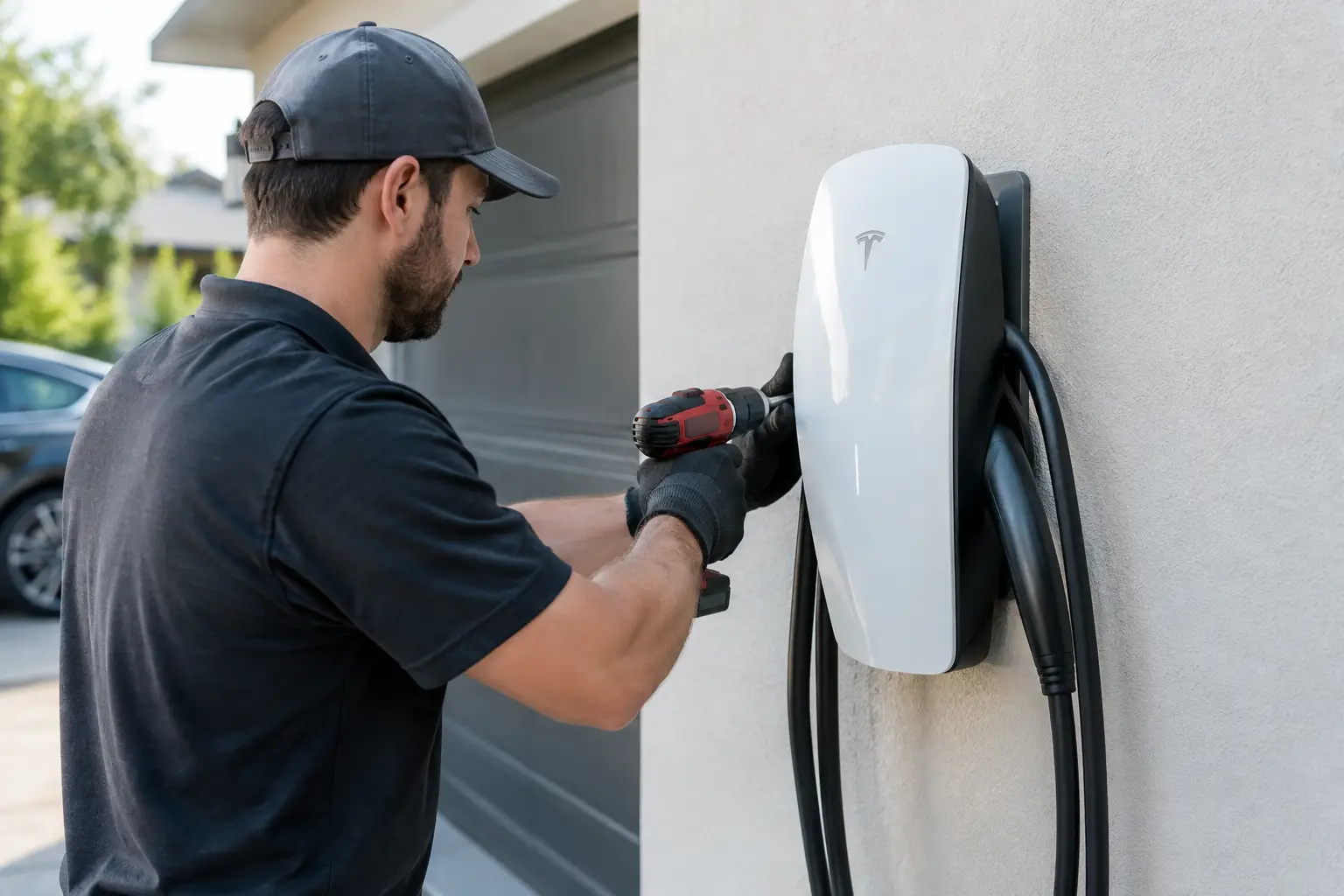
A Tesla wall connector installation can make daily driving noticeably easier. Instead of planning errands around public chargers, you come home, plug in, and start the next morning with the range you need. But the charger on the wall is only the visible part of the project. The circuit, electrical panel, wiring path, permits, and final testing determine whether it performs reliably for years.
For homeowners in San Antonio and across South Texas, a professionally planned installation also accounts for the realities of the area: hot garages, long runs from the panel to a detached garage, older electrical systems, and homes that may already carry substantial loads from air conditioning, pool equipment, or electric appliances.
What a Tesla Wall Connector Installation Involves
A Wall Connector is a Level 2 charging station designed to be permanently mounted and hardwired to a dedicated electrical circuit. It can charge a Tesla much faster than a standard household outlet, but charging speed is not simply a matter of installing the largest breaker possible.
The electrical system has to support the circuit safely. An electrician begins by evaluating the home’s service capacity, the condition and available space in the panel, the distance to the preferred charging location, and the charger’s intended output setting. The goal is to build a charging setup that works with the home instead of placing unnecessary strain on it.
The installation usually includes mounting the unit, running properly sized conductors through approved conduit or cable pathways, adding a dedicated breaker, making the hardwired connections, configuring the Wall Connector’s current limit, and verifying operation. Depending on the property and local requirements, the work may also require a permit and inspection.
Start With Your Daily Charging Needs
Most drivers do not need maximum charging speed. A practical setup depends on how many miles you drive, how long the vehicle is parked at home, and whether another EV may share the charging location later.
For example, a household that drives modestly and charges overnight may be well served by a lower-output configuration. A family with a long commute, irregular schedules, or two electric vehicles may benefit from planning for more capacity if the electrical system allows it. The right answer is based on your routine, not a one-size-fits-all recommendation.
This is also the time to choose the mounting location. A garage wall near the vehicle’s charge port is often ideal, as long as the cable can reach without being stretched, dragged across a walkway, or creating a trip hazard. Driveway and exterior installations can work well too, but they need weather-appropriate equipment placement, secure conduit, and protection from vehicle impact where necessary.
Think About the Cable Before Choosing the Wall
The Wall Connector cable should reach the vehicle comfortably while remaining organized when not in use. Mounting the unit too far from the parking position can lead to a cable that lies on the floor, crosses the garage entry, or gets caught in doors and equipment.
A technician can help identify a location that balances convenience with code-compliant routing. In a garage with limited wall space, the best location may not be the closest wall to the electrical panel. A clean, protected path for the wiring and charging cable matters just as much.
Why Panel Capacity Matters
Electric vehicle charging is considered a continuous electrical load because it can operate for several hours at a time. That means the circuit and the home’s electrical service must be evaluated with more care than a typical appliance connection.
A full electrical load calculation considers existing loads such as HVAC equipment, electric ranges, dryers, water heaters, pool pumps, hot tubs, and other major appliances. It also considers the size of the electrical service and the rating of the panel. A panel may have open breaker spaces but still lack enough available capacity for the desired EV charging circuit.
That distinction is why an inspection is valuable before ordering or scheduling equipment. Open space in a breaker box does not automatically mean the panel can safely support more load.
If capacity is limited, there may be several paths forward. The charger may be configured at a lower output, the electrical panel may need an upgrade, or the project may call for load-management equipment. The best choice depends on the home’s present demand and plans for future electrification, such as adding another EV, switching to electric appliances, or installing a pool heater.
Older Panels Deserve a Closer Look
Older homes can be excellent candidates for EV charging, but they often need more detailed evaluation. Some have undersized services, aging breakers, outdated panel equipment, or previous additions that changed the home’s electrical demand.
An experienced electrician should inspect for signs of heat damage, loose connections, corrosion, overcrowded wiring, and equipment that is no longer appropriate for a modern household. Addressing those concerns during the charging project can improve safety across the home, not just at the charger.
The Importance of a Dedicated Circuit
A Tesla Wall Connector requires its own dedicated circuit. It should not share power with a dryer, garage outlets, lighting, or another large appliance. A dedicated circuit helps prevent overloads, nuisance tripping, and voltage issues while charging.
Wire size, breaker size, conduit, and connection methods must match the selected charging output and the installation conditions. Long wire runs may require special consideration to manage voltage drop. Outdoor runs, attic pathways, and surface-mounted conduit each have different requirements for materials and workmanship.
Hardwired EV equipment should be installed according to the manufacturer’s instructions and applicable electrical code. This is not a project where guessing based on online advice is a good substitute for a site-specific assessment. A circuit that appears to work can still have undersized conductors, improper terminations, or an incorrectly configured charger setting.
Permits, Inspections, and Code Compliance
Permits can feel like an extra step, but they serve a practical purpose. EV charging adds a sustained, high-demand load to a property. A permit and inspection process helps confirm that the circuit, breaker, wiring method, grounding, equipment location, and panel capacity are appropriate.
Requirements can vary by jurisdiction, so homeowners should not assume that a neighboring city or an older online guide applies to their address. A licensed electrical contractor can determine what is required for the specific property and coordinate the work accordingly.
Code-compliant installation also supports future home projects. When the charger circuit is clearly labeled, properly documented, and installed in an orderly manner, future electricians, inspectors, and prospective buyers can understand the system more easily.
What Happens on Installation Day
A well-managed installation begins with confirming the charger location, the vehicle parking position, and the wiring route. The electrician will shut off power as needed, install the new circuit and required wiring, mount the Wall Connector, and make all terminations according to specifications.
Before the job is complete, the system should be tested. That includes checking breaker operation, verifying charger configuration, confirming charging begins correctly, and inspecting the installation for secure connections and a clean finish. The charger should be labeled at the panel, and the homeowner should understand how to use it and what to watch for.
You should also receive a straightforward explanation if the electrician finds an issue that affects the project, such as limited panel capacity or damaged existing equipment. Clear recommendations matter because an EV charger is often the first major new electrical load a household has added in years.
Common Questions About Tesla Wall Connector Installation
Can I install a Wall Connector outdoors?
Yes, when the location, mounting method, wiring pathway, and equipment installation are suitable for outdoor use. Exterior chargers should be positioned to avoid physical damage, standing water, and cable strain. In South Texas, choosing a location with reasonable protection from direct sun and accidental impact can also help preserve the installation over time.
Can I use my existing garage outlet circuit?
Usually, no. A Wall Connector needs a dedicated hardwired circuit sized for its configured output. Existing garage outlet circuits are commonly shared with lighting or receptacles and are not intended for sustained EV charging loads.
Do I need a panel upgrade?
Not always. Some homes have adequate service capacity and panel space for a new EV circuit. Others need a panel upgrade, a lower charging setting, or a different electrical design. A load calculation and panel inspection provide the answer.
A home charger should feel like a dependable part of your routine, not another electrical concern to manage. Jireh Electric can assess the system behind the wall, explain the options clearly, and complete the work with the care your home deserves.