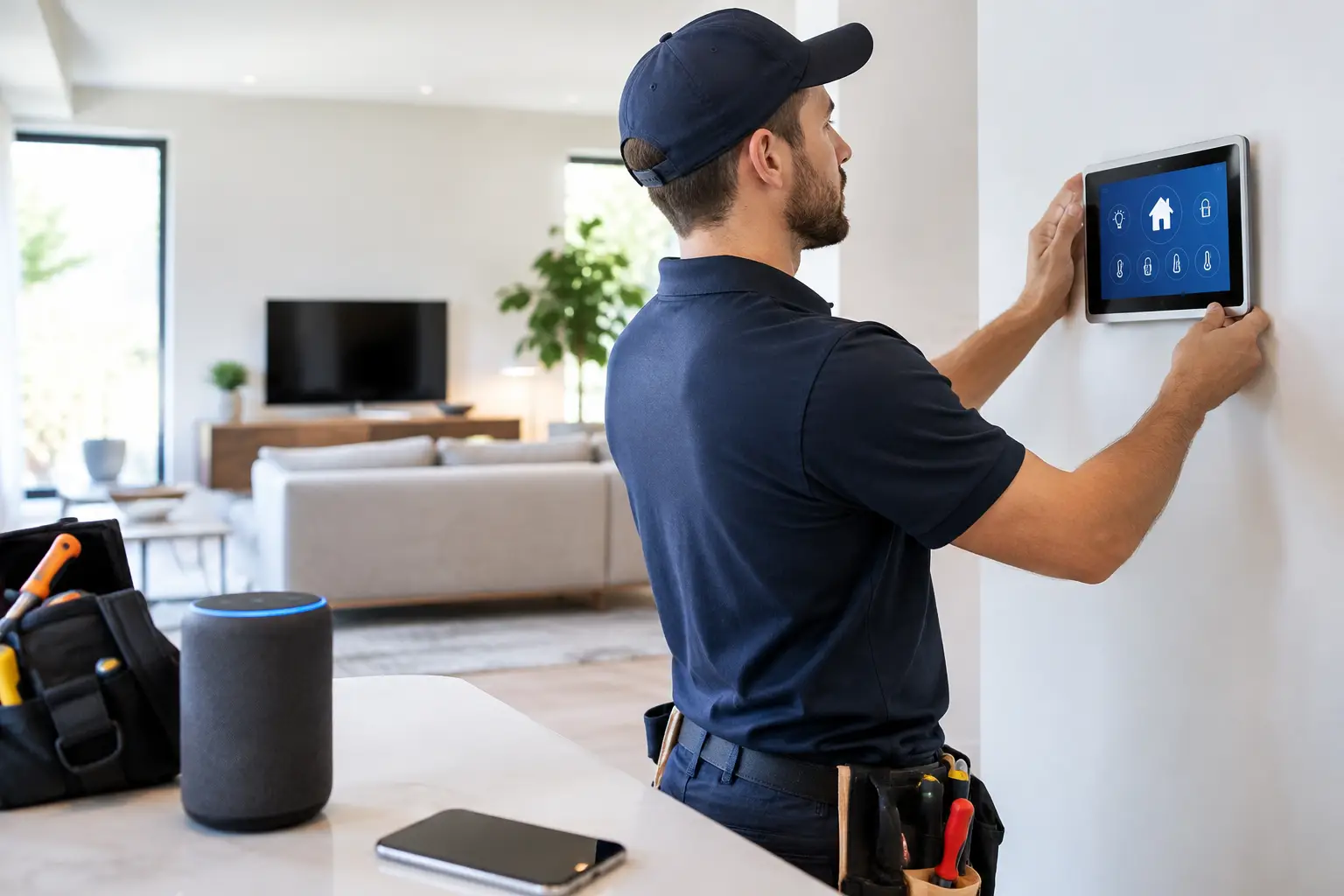
A voice command that turns on a lamp is simple. Coordinating smart lighting, cameras, door locks, climate controls, shades, Wi-Fi equipment, and dedicated electrical circuits is a different kind of project. A smart home automation electrician helps make sure the technology in your home is supported by safe wiring, a reliable electrical system, and a plan that will still make sense when your needs change.
For homeowners in San Antonio and across South Texas, smart-home work often begins during a remodel, custom build, panel upgrade, or security improvement. It can also start with one frustrating problem: a Wi-Fi switch that drops offline, a video doorbell with weak power, or a room where smart devices are competing for too few outlets. The right approach is not adding more devices at random. It is assessing the home first, then installing the electrical and low-voltage infrastructure the system actually needs.
What a Smart Home Automation Electrician Does
A smart-home project sits at the intersection of electrical safety, device compatibility, communications wiring, and daily convenience. An electrician can install the electrical side correctly while helping you understand where automation makes practical sense.
That may include smart switches and dimmers, automated lighting scenes, occupancy sensors, smart thermostats, video doorbells, security cameras, motorized shades, structured data wiring, audio-video connections, and controls for outdoor lighting. For larger projects, it can also involve a dedicated equipment location for network hardware, security components, and control equipment.
The electrical foundation matters more than many homeowners realize. A smart switch may need a neutral wire in its box. A doorbell camera may require an upgraded transformer. Exterior cameras may need properly routed, protected wiring and a sensible mounting location. New loads, such as automated shades across several rooms or a connected pool system, may call for added circuits or panel capacity.
A qualified electrician can identify these requirements before drywall goes up, before a new fixture is selected, or before an installer discovers that the existing wiring cannot support the equipment.
Start With the Home, Not the Gadget List
The strongest smart-home systems are built around how people use their space. A household with young children may value entry lighting that comes on automatically, door alerts, and easy whole-home shutoff controls. A frequent traveler may prioritize exterior cameras, lighting schedules, leak detection, and reliable remote access. A business owner may need controlled access, security coverage, and dependable network or data wiring.
Think through the moments that create friction. Do you regularly enter through a dark garage? Are lights left on in rooms no one is using? Would it help to check an entry camera from another part of the house? Do you want a few rooms to work better during an outage when paired with a generator or backup-power plan? These answers shape the design better than choosing equipment based only on features.
It also helps to separate must-haves from future possibilities. Installing a few smart dimmers is often straightforward. Planning for a whole-home system is more involved and may be best handled in phases. During a renovation, adding conduit, extra wiring paths, and properly located boxes can prevent major disruption later.
Wiring Details That Make or Break Reliability
Smart devices rely on more than an app. They need steady power, clean connections, and appropriate locations. Poor electrical connections can cause flickering, intermittent operation, nuisance tripping, or devices that appear to fail when the real issue is wiring.
Neutral wires are a common example. Many older switch locations do not have a neutral conductor available in the box. Some smart switches are designed to work around that limitation, but compatibility depends on the fixture, load type, and existing wiring. In other cases, running new wiring is the safer and more dependable solution.
Lighting loads deserve a close look as well. LEDs use very little power, but not every dimmer is compatible with every LED driver or bulb. A smart dimmer that works perfectly with one fixture may buzz, flicker, or provide a narrow dimming range with another. The goal is not merely to make the switch respond to a phone. It is to make the lighting comfortable and reliable every day.
Outdoor equipment brings additional concerns. Devices exposed to heat, rain, sun, and dust need suitable enclosures, weather-rated components where required, and secure installation. South Texas weather can be hard on exterior electrical equipment, so thoughtful placement and proper protection are worth addressing from the start.
When Professional Electrical Help Is the Right Call
Some plug-in smart products are appropriate for homeowners to set up themselves. A smart speaker, plug-in lamp module, or battery-powered sensor usually does not alter the home’s electrical system. The line changes when a project involves branch-circuit wiring, panels, new outlets, hardwired equipment, exterior electrical connections, or low-voltage cabling routed through walls and ceilings.
Professional help is especially useful when you are replacing multiple switches, adding smart lighting in several rooms, installing hardwired cameras, building a home theater, finishing an attic or garage, or remodeling a kitchen. These projects often reveal older wiring conditions, crowded electrical boxes, missing grounding, or limited panel capacity that should be addressed properly rather than hidden behind new technology.
It is also the right choice when a device is behaving unpredictably. A smart switch that repeatedly disconnects may have a network problem, but it could also point to a wiring issue, an incompatible load, or a loose connection. Guessing at electrical work can turn a small inconvenience into a safety concern.
Plan for the Network Without Confusing It With Electrical Work
A connected home depends heavily on the network, but Wi-Fi and electrical wiring solve different problems. Strong Wi-Fi coverage helps devices communicate. Correct electrical work powers them safely. Both should be considered together, especially in larger homes, detached structures, workshops, and properties with outdoor cameras or gates.
Hardwired data connections can be a smart option for fixed equipment such as cameras, access points, televisions, and office workstations. They reduce dependence on wireless coverage and can make the system more consistent. During a remodel or new construction project, structured wiring is far easier to install before walls are closed.
Avoid placing networking gear in locations that are excessively hot, damp, difficult to access, or crowded with unrelated equipment. A well-planned central location gives technicians room to label cables, service components, and make future additions without turning one closet into a tangled problem.
Choose Automation That Still Works for Everyone
Convenience should not make a home harder to use. Physical switches should remain intuitive for family members, guests, and service professionals. A room should still have a sensible way to turn lights on and off if the internet is down, a phone battery is dead, or an app has been updated.
This is one reason professionally planned systems focus on everyday behavior. Lighting scenes can be useful, but basic controls must remain clear. Automated schedules should account for changing routines. Motion sensors can save energy in closets, hallways, and utility spaces, yet they may be frustrating in a home office or bedroom if the timing and placement are wrong.
Privacy is another practical consideration. Cameras, microphones, and connected locks should be selected and positioned intentionally. Exterior cameras should cover entry points without unnecessarily pointing into a neighbor’s private space. Keep account access secure, use strong unique passwords, and remove previous users when a property changes hands.
Make Room for Future Electrical Upgrades
Smart-home automation rarely stays frozen in time. A family may later add an EV charger, generator connection, pool equipment, solar-related electrical work, more exterior lighting, or a home office. Each upgrade has its own electrical demands, and all of them draw from the same service and panel capacity.
That does not mean every home needs a major upgrade before installing smart lighting. It means a good electrician looks at the larger picture when the scope calls for it. If the panel is already full, if circuits are overloaded, or if the home has aging equipment, addressing those issues early can protect the reliability of every connected system added afterward.
For custom homes and major renovations, documenting circuits, cable routes, equipment locations, and control zones is equally valuable. Clear labels and thoughtful records save time when troubleshooting or expanding the system years later.
A smart home should feel calmer, not more complicated. Start with the routines and safety improvements that matter to your household, then build on a dependable electrical foundation. Jireh Electric can help homeowners plan connected-home upgrades with clear explanations, respectful service, and workmanship designed to support the way the home is actually used.