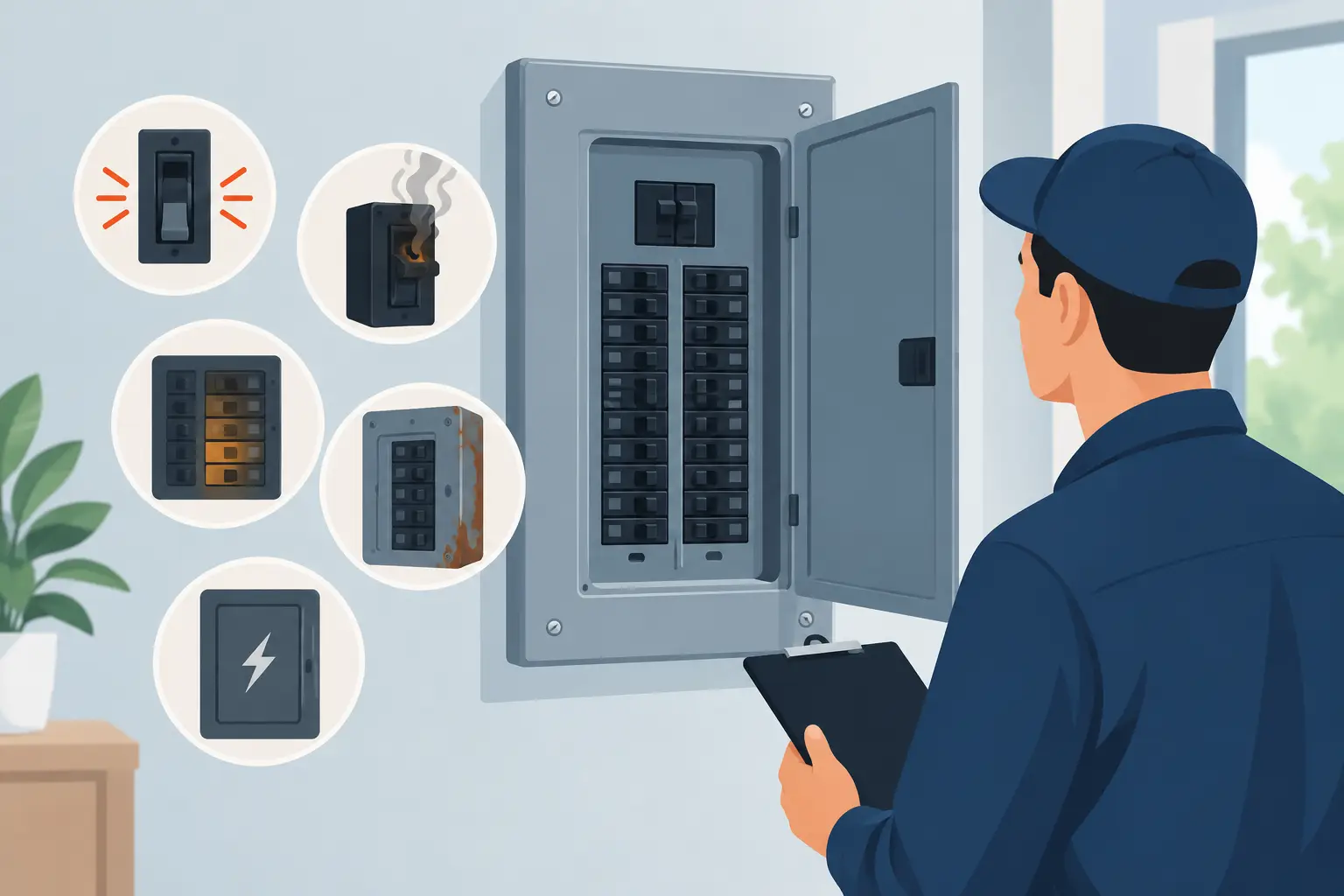
That breaker that trips every time the microwave and air conditioner run is not always just a nuisance. It can be one of the signs breaker box needs replacement, especially when repeated trips come with heat, buzzing, flickering lights, or an aging panel that was not designed for modern electrical demand.
Your breaker box, also called an electrical panel or service panel, is the traffic controller for your property’s electricity. It receives power from the utility and distributes it safely to individual circuits. When it is working properly, most homeowners rarely think about it. When it starts showing warning signs, prompt attention can help prevent damaged equipment, costly outages, and serious electrical hazards.
1. Breakers Trip Frequently or Will Not Reset
A breaker is designed to trip when a circuit is overloaded or a fault is detected. An occasional trip may simply mean too many appliances are plugged into one circuit. For example, a space heater, hair dryer, and bathroom outlet may overload the same circuit.
Frequent tripping is different. If the same breaker trips repeatedly under normal use, or trips immediately after you reset it, the issue could involve a damaged breaker, loose connection, short circuit, or panel problem. Never keep resetting a breaker that will not stay on. That action can allow a dangerous condition to continue heating behind the panel cover or inside a wall.
A licensed electrician should diagnose the cause before recommending replacement. Sometimes one faulty breaker or circuit repair solves the issue. In other cases, recurring trips across several circuits are a sign that the panel no longer has the capacity or condition your home needs.
2. The Panel Feels Hot, Smells Burnt, or Shows Discoloration
Your breaker box should not feel hot to the touch. A little warmth can occur under heavy electrical load, but noticeable heat, a burning-plastic odor, scorch marks, or melted insulation requires immediate attention.
These symptoms can point to a loose connection, failing breaker, overloaded bus bar, or damaged wiring. Electricity moving through a poor connection creates resistance, and resistance creates heat. Left alone, that heat can damage the panel further and increase fire risk.
If you smell burning, see smoke, hear arcing, or notice sparks near the panel, move people away from the area and call for emergency electrical service. If it is safe to do so, turn off the main breaker, but do not remove the panel cover or attempt a repair yourself. The equipment inside can remain energized even when individual breakers are off.
3. You Hear Buzzing, Crackling, or Humming
A faint, steady electrical hum can sometimes come from equipment under load, but buzzing or crackling from a breaker box is not something to ignore. Those sounds may indicate a loose wire, deteriorated breaker, or electrical arcing.
Arcing occurs when electricity jumps across a gap instead of traveling through a secure connection. It generates intense heat and can damage nearby components quickly. The sound may come and go as appliances start, temperatures change, or electrical demand rises, which is why homeowners sometimes dismiss it.
Treat unusual panel noise as a reason to schedule an inspection soon. A professional can check connections, breakers, grounding, panel condition, and circuit loads without guessing at the source.
4. Rust, Corrosion, or Water Damage Is Present
South Texas humidity, storm-related water intrusion, and plumbing leaks can all affect electrical equipment. Rust on the panel enclosure, corrosion around breakers, water staining, or white residue inside or around the box can compromise electrical connections.
A panel installed in a garage, exterior location, utility room, or other damp area deserves particular attention. Moisture and electricity are a dangerous combination. Even if the power appears to work normally, corrosion can weaken connections and cause failures later.
The right solution depends on the extent of damage. A minor exterior issue may be repairable once the moisture source is corrected. Significant internal corrosion or water exposure often makes breaker box replacement the safer choice. An electrician should also identify why moisture reached the panel so the new equipment is protected.
5. Lights Flicker or Appliances Lose Power Unexpectedly
Flickering lights can be caused by a loose bulb or failing light fixture, but widespread or recurring flickering deserves a closer look. Pay attention if lights dim when the air conditioner starts, brighten suddenly, or flicker in several rooms at once.
Other warning signs include appliances shutting off unexpectedly, outlets that work intermittently, or certain rooms losing power while the breakers appear to be on. These issues may stem from a failing breaker, loose neutral connection, damaged wiring, or trouble at the service equipment.
Because voltage irregularities can damage sensitive electronics, it is smart to act quickly. A surge protector can help protect devices from certain power events, but it does not repair a failing panel or loose connection.
6. The Panel Is Old, Obsolete, or Uses Fuses
Age alone does not automatically mean a breaker box must be replaced. A well-maintained panel may continue to serve a home safely if it is properly sized and in good condition. Still, older electrical systems deserve an evaluation, particularly if the home has been remodeled or its electrical needs have changed.
Fuse boxes are a clear example. Fuses can provide overcurrent protection, but they are generally less practical for today’s homes and can encourage unsafe workarounds, such as installing an oversized fuse. Older panels may also have limited capacity, worn components, unavailable replacement parts, or a service history that makes upgrades advisable.
If you are unsure of your panel’s age or manufacturer, do not rely on internet advice alone. Some legacy panel brands and models have known safety concerns, while others may be serviceable. A qualified electrician can identify the equipment and explain whether repair, upgrade, or replacement is appropriate.
7. Your Electrical Needs Have Outgrown the Panel
Modern homes ask more from electrical systems than homes built decades ago. Central air conditioning, larger kitchen appliance loads, home offices, hot tubs, pool equipment, smart-home devices, and electric vehicle chargers all add demand. A breaker box that once handled lighting and a few small appliances may no longer have adequate capacity or open spaces for new circuits.
Warning signs include a crowded panel, double-tapped breakers, extension cords used as permanent solutions, or a lack of room for a needed circuit. You may also notice that installing a new appliance requires turning off or rearranging existing circuits.
A panel upgrade can provide the capacity needed for an EV charger, generator connection, remodel, or major appliance installation. It is not always necessary to replace the entire service. In some situations, a subpanel is a practical option. The best approach depends on the home’s existing service size, load calculation, condition of the main panel, and future plans.
What Happens During a Breaker Box Evaluation?
A professional evaluation should be straightforward and informative. The electrician will look for visible damage, test the panel and breakers as appropriate, review the service capacity, inspect grounding and bonding, and ask about the electrical problems you have noticed. They may also assess large appliances, HVAC equipment, planned additions, and other loads that affect capacity.
If replacement is recommended, ask what is included. A clear proposal should explain the panel size, number of circuits, required code updates, permit and inspection requirements, outage expectations, and whether any related wiring repairs are needed. The lowest quote is not always the best value if it leaves out essential safety work or uses equipment that does not support your plans.
For San Antonio homeowners and businesses, Jireh Electric can provide a clear assessment of panel condition and explain the practical options without pressure. The goal is to correct the actual problem, whether that means repairing a connection, replacing a failed breaker, installing a subpanel, or upgrading the main breaker box.
Do Not Wait for a Complete Power Failure
A breaker box rarely picks a convenient time to fail. Problems often become obvious during peak demand, such as a hot afternoon when the AC is running, a holiday gathering, or the first time you plug in a new high-demand appliance. Addressing early warning signs gives you more control over the timing, scope, and cost of the work.
If your panel is hot, damaged, noisy, corroded, or repeatedly tripping, schedule a licensed electrical inspection rather than trying another reset. A careful diagnosis now can protect your property, your equipment, and the people who depend on both.