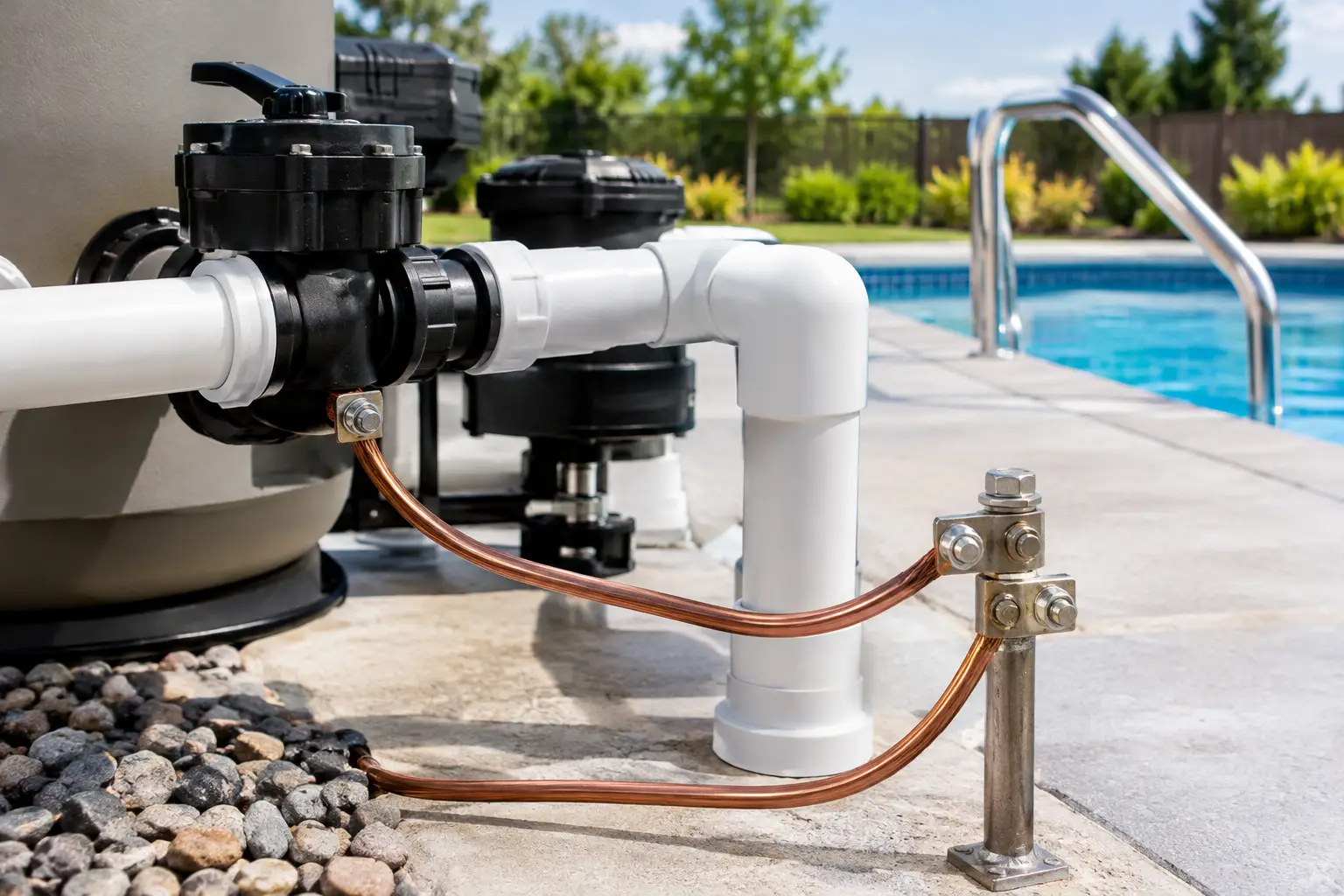
A pool can look completely normal while a dangerous voltage difference exists between the water, deck, ladder, pump, and nearby metal. That is why pool electrical bonding requirements are not a minor construction detail. They are a core shock-protection measure designed to keep conductive parts around the pool at the same electrical potential.
For homeowners, the distinction can be confusing because bonding and grounding are often used as if they mean the same thing. They do not. A pool may have equipment that appears grounded and still have bonding defects that need attention. Understanding the difference helps you know what to ask during a pool installation, renovation, inspection, or electrical repair.
What electrical bonding does around a pool
Bonding connects metal and other conductive components in and around a pool with an intentional, low-resistance path. The goal is equipotential bonding: reducing the voltage difference a swimmer or person standing barefoot on the deck could contact at the same time.
Electricity follows available paths. If a fault, damaged wire, failed piece of equipment, or stray voltage introduces a difference in electrical potential, a person can become part of the path between two conductive surfaces. Water, wet skin, bare feet, metal rails, and damp concrete make a pool area especially unforgiving.
A properly installed bonding system does not replace grounding, GFCI protection, correctly wired equipment, or regular maintenance. Each safeguard has a separate job. Bonding helps equalize voltage between accessible conductive parts. Grounding provides a path for fault current back to the electrical system. GFCIs are designed to shut off power when they detect an imbalance that may indicate current is traveling where it should not.
Pool electrical bonding requirements: what is commonly bonded
Pool bonding requirements are generally based on the National Electrical Code, along with the code adopted by the local authority having jurisdiction. The exact requirements depend on the pool type, equipment, renovation scope, and applicable code edition. A licensed electrician should verify the details for the specific property rather than relying on a general online diagram.
In a typical permanently installed pool, the bonding system may need to connect several conductive elements, including:
- Reinforcing steel in the pool shell or a conductive grid installed within the structure
- Metal fittings, shell components, and underwater lighting niches where applicable
- Metal handrails, ladders, diving-board supports, and other fixed metal parts within the required area
- Metal parts of pool circulation equipment, such as pumps, heaters, and filters when required
- The conductive perimeter surface around the pool, which may include reinforced concrete or an approved bonding grid beneath the deck
The perimeter surface is frequently overlooked. The deck is where people stand with wet, bare feet while touching a rail, fixture, or other metal component. For that reason, code rules often require an equipotential bonding surface extending around the pool. Whether a particular deck material qualifies, and how a bonding grid must be installed, depends on the construction and local code requirements.
Many installations use a solid copper bonding conductor, commonly no smaller than 8 AWG for the equipotential bonding grid under widely used NEC provisions. That does not mean every pool can be evaluated by looking for one exposed copper wire. Connections can be concealed, materials and methods can vary, and newer or specialty installations may use listed alternatives. The complete system and its continuity matter.
Bonding is not the same as grounding
This is the most common point of confusion in pool electrical work. A pool pump may have a grounding conductor connected to its motor. That connection helps route electrical fault current back to the service equipment so the breaker can operate. It does not automatically bond the pool shell, deck, railings, water-related components, and other conductive parts together.
Likewise, attaching a bonding conductor to a ground rod is not a substitute for an equipotential bonding grid. A ground rod has a different purpose in the electrical system. It cannot reliably perform the job of keeping all accessible pool-area surfaces at substantially the same voltage.
Think of grounding as a fault-clearing path and bonding as a way to reduce touch-voltage differences between objects a person may contact. Both are necessary, but neither replaces the other.
Where bonding problems tend to show up
Bonding defects are often discovered during a pool renovation, equipment replacement, safety inspection, or real estate transaction. In older pools, original connections may have corroded, been buried under later work, or never been installed to current standards. Saltwater environments and South Texas heat, moisture, and soil conditions can accelerate corrosion at vulnerable connections.
A new patio, resurfaced deck, replacement handrail, or upgraded pool light can also interrupt or bypass part of an existing bonding system. For example, installing a new metal rail without verifying its bonding connection can leave an accessible conductive object outside the intended protection system. Replacing a pump is another moment when workmanship matters: the equipment must be properly grounded and any required bonding connections must be restored.
Plastic plumbing does not automatically eliminate bonding concerns. Modern pool systems often combine nonmetallic plumbing with metal equipment, rails, lights, reinforcing steel, and conductive deck components. The electrical professional evaluating the system must look at the entire installation, not just one pipe or one piece of equipment.
Warning signs that deserve prompt attention
Do not wait for a visible spark to take pool electrical safety seriously. Tingling sensations in the water, on the deck, or when touching a rail are urgent warning signs. Leave the pool immediately, keep others away, and shut off pool power only if it can be done safely without approaching a hazardous area. Call a qualified electrician for an evaluation.
Other signs are less dramatic but still worth addressing: corroded or loose bonding clamps, damaged pool-light fixtures, a pump that repeatedly trips a breaker or GFCI, missing equipment grounding connections, exposed wiring, or electrical work performed during a renovation without a clear inspection record.
A bonding issue cannot always be identified by sight. An electrician may need to inspect accessible connections, verify continuity, evaluate equipment wiring and GFCI protection, and identify changes made since the original pool installation. If unsafe conditions are found, the pool should stay out of service until repairs are complete and the system can be safely tested.
When a pool bonding inspection makes sense
A focused electrical inspection is a smart step before opening an older pool for the season, after storm damage, and before major deck or equipment work. It is also worthwhile when buying a home with a pool, especially if the pool’s age, renovation history, or electrical documentation is unclear.
For new construction and major remodels, bonding should be planned before concrete is placed and before finishes conceal the work. Trying to correct missing bonding after a deck is complete can be far more disruptive than coordinating the electrical work early. Clear communication between the pool builder, electrician, and inspector helps prevent expensive rework and avoids assumptions about who is responsible for each connection.
Homeowners should avoid trying to add clamps, jumpers, or connections themselves. A connection that looks secure may be attached to the wrong component, use unsuitable hardware, or conceal a larger issue elsewhere in the system. Pool electrical work requires a careful understanding of applicable code, equipment instructions, and the specific construction of the pool.
For San Antonio and South Texas property owners, Jireh Electric can evaluate pool equipment wiring, grounding, GFCI protection, and bonding concerns with the same careful approach used for the rest of your electrical system. The safest pool is not simply one with power running to the pump. It is one where every protective layer has been installed, maintained, and checked with the people using the pool in mind.