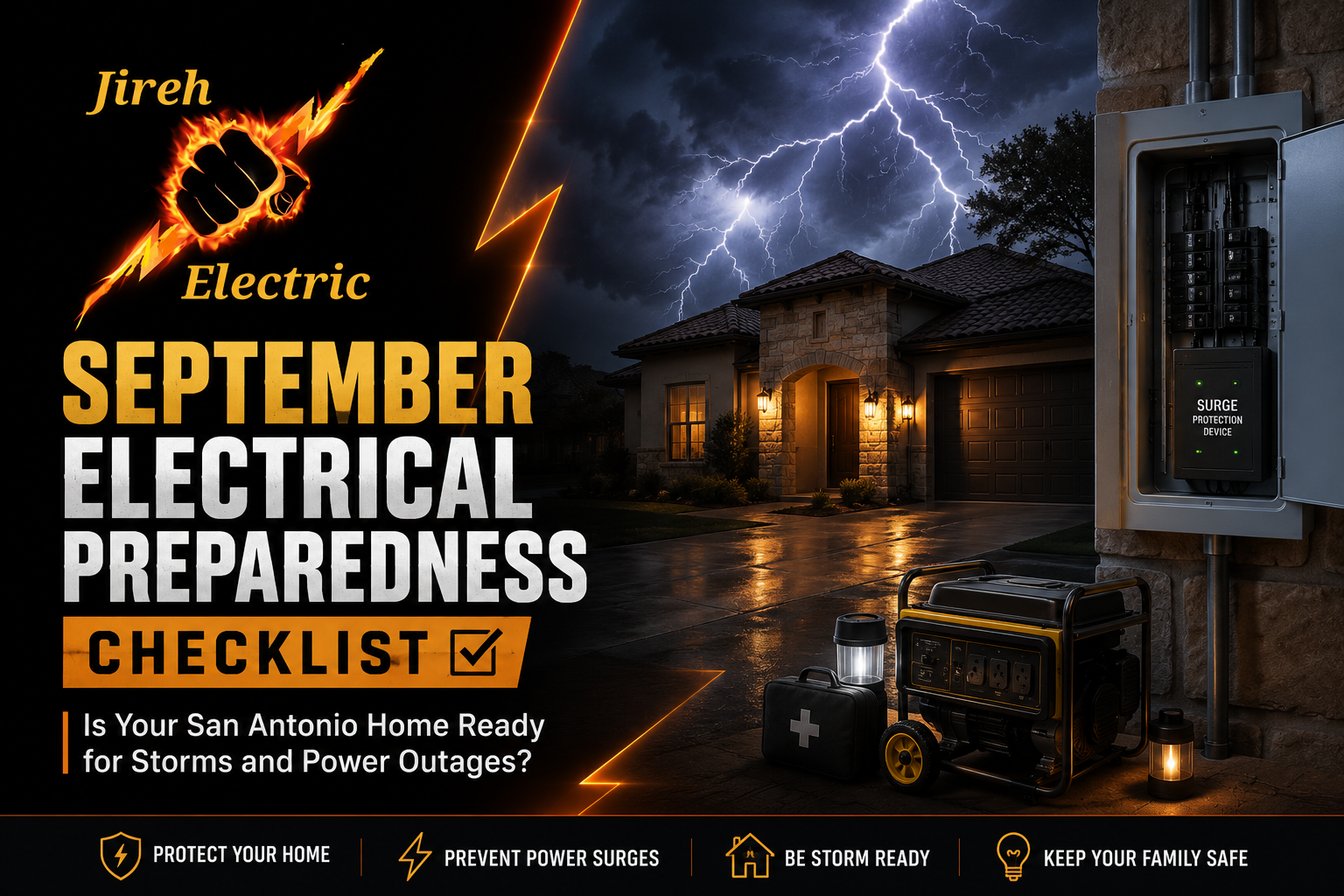
September is National Preparedness Month, making it an ideal time for San Antonio homeowners to examine how prepared their properties are for severe weather, power outages, voltage fluctuations, and unexpected electrical emergencies.
Storms and utility interruptions can occur with little warning. When the power goes out, homeowners often focus on flashlights, food, batteries, and charging their phones. However, the condition of the home’s electrical panel, wiring, outlets, surge protection, and backup-power connections is just as important.
An aging or overloaded electrical system may struggle during periods of high demand. Electrical problems can also become apparent when utility power is interrupted and later restored. Frequently tripped breakers, flickering lights, warm outlets, buzzing sounds, and burning odors may indicate that your electrical system needs professional attention.
Jireh Electric provides dependable residential and commercial electrical services throughout Greater San Antonio and South Texas. Locally owned and operated by Master Electrician Israel Vargas, Jireh Electric helps property owners prepare for outages, address electrical warning signs, install surge protection, upgrade electrical panels, and resolve electrical problems before they become more serious.
Why September Is a Good Time to Evaluate Your Electrical System
Preparing for an electrical emergency is easier when you address concerns before severe weather arrives.
September offers an opportunity to inspect the systems that keep your home powered and protected. Even if your electrical system appears to be operating normally, hidden problems can develop inside panels, outlets, switches, junction boxes, and wiring connections.
A professional electrical evaluation may identify:
- Loose electrical connections
- Damaged or deteriorating wiring
- Overloaded circuits
- Aging circuit breakers
- Insufficient panel capacity
- Improper grounding or bonding
- Signs of overheating
- Outdated electrical components
- Missing GFCI protection
- Inadequate surge protection
- Unsafe generator connections
- Electrical issues caused by previous repairs or remodeling
Identifying these conditions early can help reduce the likelihood of a sudden electrical failure during a storm or power outage.
Start With Your Electrical Panel
The electrical panel is the central distribution point for the electricity used throughout your property. It directs power to the circuits serving your lighting, outlets, appliances, pool equipment, home office, security system, and other electrical devices.
Circuit breakers are designed to shut off power when they detect an overload or certain electrical faults. When breakers trip repeatedly, they may be warning you about an underlying problem.
Common panel warning signs include:
- Breakers that trip frequently
- Breakers that will not remain reset
- Flickering or dimming lights
- Buzzing, humming, or crackling sounds
- A panel that feels unusually warm
- Burning or melted-plastic odors
- Rust, moisture, or corrosion
- Discoloration around breakers
- Visible scorch marks
- A lack of space for needed circuits
- A fuse box or aging panel that no longer supports the property’s needs
Do not remove the panel cover or attempt to repair internal electrical components yourself. Even when individual breakers are switched off, parts of the electrical panel may remain energized.
Our licensed electricians can safely inspect the panel, identify problems, evaluate its capacity, and recommend appropriate repairs or upgrades.
Can Your Electrical Panel Support Your Current Power Needs?
Homes use far more electrical equipment today than they did several decades ago. Even a property that has not undergone a major addition may now contain televisions, computers, security cameras, smart-home equipment, pool systems, EV chargers, outdoor kitchens, and additional appliances.
Your electrical panel may be supplying power to:
- Kitchen appliances
- Refrigerators and freezers
- Ceiling fans
- Home-office equipment
- Entertainment systems
- Smart lighting
- Security systems
- Pool pumps and controls
- Hot tubs and spas
- Electric vehicle chargers
- Outdoor lighting
- Garage equipment
- Workshops
- Additional refrigerators
- Medical or accessibility devices
When several high-demand devices operate simultaneously, an older or undersized electrical system may become overloaded.
A professional load calculation can help determine whether your electrical service is large enough for your current needs. This is especially important when you are planning a remodel, home addition, EV charger, pool, hot tub, workshop, outdoor kitchen, or other electrical improvement.
Protect Your Home With Whole-Home Surge Protection
A power surge is a sudden increase in voltage. Surges may be caused by lightning, utility activity, damaged power lines, outages, service restoration, or equipment cycling on and off.
Modern homes contain sensitive electronic components throughout the property. A voltage spike can affect more than televisions and computers. Refrigerators, ovens, washers, dryers, security systems, smart appliances, garage-door openers, pool controls, and other equipment may also contain electronic circuit boards.
Whole-home surge protection can provide an important layer of protection for:
- Televisions
- Computers and laptops
- Wi-Fi equipment
- Refrigerators and freezers
- Washers and dryers
- Kitchen appliances
- Security cameras
- Alarm systems
- Smart-home equipment
- Garage-door openers
- Pool and spa controls
- EV charging equipment
- Home-office electronics
- Entertainment systems
Plug-in surge protectors can help protect individual devices, but they do not cover every circuit or hardwired system in the home. Some power strips provide additional outlets without providing meaningful surge protection at all.
A whole-home surge protective device is installed at or near the main electrical panel. It helps divert excess voltage before it travels throughout the home’s electrical system.
No surge protection system can prevent every possible type of damage. However, professionally installed whole-home surge protection can help reduce the risk associated with many common voltage spikes.
National Preparedness Month Helps You Prepare for Power Outages Before They Happen
Power outages can be inconvenient, but they may also create electrical risks when homeowners use generators, extension cords, or temporary equipment incorrectly.
Before an outage occurs, create a household preparedness plan that includes:
- Working flashlights
- Extra batteries
- Charged portable power banks
- Emergency contact numbers
- A battery-operated weather radio
- A plan for refrigerated food
- Safe backup power options
- Knowledge of where the electrical panel is located
- A list of important medical or accessibility equipment
- Instructions for safely shutting down sensitive electronics
Homeowners should also know which electrical conditions require professional assistance.
Call an electrician when:
- A breaker repeatedly trips
- Part of the home remains without power after service is restored
- Lights remain unusually bright or dim
- Outlets or switches feel warm
- You hear buzzing or crackling
- You smell burning or melting plastic
- A breaker will not reset
- Electronics or appliances operate unpredictably
- The electrical panel shows signs of water or storm damage
- A surge protector indicates that protection has failed
If you see smoke, flames, active sparking, or a downed power line, move to a safe location and contact emergency services or the appropriate utility provider.
Never Connect a Portable Generator Directly to Home Wiring
A portable generator can provide limited backup power during an outage, but it must be used safely.
Never connect a portable generator directly to household wiring through an outlet. This unsafe practice can create backfeeding, placing utility workers, neighbors, first responders, and household occupants at risk.
Generators should always be operated outdoors and positioned away from doors, windows, vents, and occupied areas. They should never be used inside a house, garage, shed, or enclosed patio.
A safe generator setup may require:
- Properly sized electrical connections
- Approved transfer equipment
- Correct grounding and bonding
- Dedicated circuits
- Suitable overcurrent protection
- Professional installation
- Appropriate placement and ventilation
- Compliance with applicable electrical requirements
Jireh Electric can evaluate your electrical system and install the electrical components needed for a properly planned generator connection.
Inspect Outdoor Electrical Equipment
Storm preparation should also include outdoor outlets, lighting, pool equipment, hot-tub wiring, and other exterior electrical systems.
Outdoor electrical equipment is exposed to rain, moisture, heat, insects, landscaping activity, and physical damage. Cracked covers, loose wiring, corrosion, and damaged conduit can create safety concerns.
Inspect visible outdoor components for:
- Cracked or missing outlet covers
- Loose fixtures
- Damaged extension cords
- Exposed wiring
- Corrosion
- Water inside electrical boxes
- Broken landscape lights
- Damaged pool or spa equipment
- Outlets that no longer work
- GFCI devices that will not test or reset
Do not handle damaged outdoor electrical equipment while standing in water or during an active storm.
A licensed electrician can repair damaged components, install weather-resistant covers, provide GFCI protection, and correct unsafe outdoor wiring.
Test GFCI Outlets
Ground-fault circuit interrupter outlets are designed to shut off power quickly when they detect certain electrical imbalances. They are commonly used in locations where electricity may be near water.
GFCI protection is especially important in:
- Bathrooms
- Kitchens
- Garages
- Outdoor areas
- Laundry spaces
- Pool and spa areas
- Other damp or wet locations
Most GFCI outlets include TEST and RESET buttons. If the device will not test, reset, or restore power, it may need professional evaluation or replacement.
Do not assume that a nonworking outlet is simply defective. The problem could involve the GFCI device, another outlet connected downstream, a tripped breaker, damaged wiring, or a loose connection.
Jireh Electric provides GFCI outlet installation, replacement, and troubleshooting for homes and businesses.
Address Flickering Lights Before the Next Storm
Occasional light flickering may be caused by something as simple as a loose bulb. However, repeated flickering can indicate a more serious electrical issue.
Potential causes include:
- Loose wiring
- Overloaded circuits
- Aging switches
- Failing fixtures
- Voltage fluctuations
- Damaged electrical connections
- Panel problems
- Faulty breakers
- Utility-related issues
Pay attention to when and where the flickering occurs.
A single flickering fixture may indicate a localized problem. Flickering that affects several rooms or the entire property may point to a larger electrical issue.
Do not ignore flickering that occurs with buzzing sounds, warm outlets, burning odors, or frequent breaker trips.
Replace Damaged Extension Cords and Power Strips
Extension cords are intended for temporary use. They should not serve as a permanent replacement for properly installed outlets and wiring.
Before September storms arrive, inspect extension cords and power strips for:
- Cuts or cracks
- Exposed conductors
- Loose plugs
- Bent prongs
- Melted plastic
- Discoloration
- Scorch marks
- Damaged grounding pins
- Overloaded connections
Do not place extension cords under rugs, through doorways, or where they may be pinched or damaged. Avoid connecting several high-demand appliances to the same power strip.
When a room does not have enough outlets, Jireh Electric can install additional electrical outlets and dedicated circuits where needed.
Check Smoke Alarms and Carbon Monoxide Alarms
Electrical preparedness should include working smoke alarms and carbon monoxide alarms.
Test each alarm according to the manufacturer’s instructions and replace batteries as needed. Devices that have reached the end of their recommended service life should be replaced.
Hardwired alarms may still rely on backup batteries during a power outage. An alarm that chirps, fails to test, or behaves unpredictably may need attention.
Properly placed, functioning alarms provide an important warning if an electrical problem causes smoke or fire.
Watch for Signs of Water Near Electrical Equipment
Water and electricity are a dangerous combination.
After heavy rain or storm damage, inspect the area around the electrical panel, outlets, switches, appliances, and outdoor equipment. Do not touch electrical equipment that is wet or located near standing water.
Potential concerns include:
- Water entering the electrical panel
- Roof leaks near wiring
- Flooded outlets
- Wet extension cords
- Damaged outdoor boxes
- Moisture around pool equipment
- Water inside garages or utility rooms
- Corroded electrical components
Electrical equipment affected by water may require professional inspection or replacement. Drying the exterior does not necessarily make the equipment safe to use.
Electrical Preparedness for San Antonio Businesses
Commercial properties also need an electrical preparedness plan. A power outage or surge can interrupt operations, damage equipment, affect customer service, and create lost revenue.
Businesses may depend on:
- Computers
- Servers
- Point-of-sale equipment
- Security systems
- Lighting
- Refrigeration
- Communication equipment
- Electronic access systems
- Office equipment
- Commercial machinery
- Internet and networking devices
Commercial property owners should consider panel evaluations, surge protection, emergency lighting, dedicated circuits, generator connections, and repairs to visible electrical problems.
Jireh Electric provides commercial electrical services for offices, retail properties, warehouses, restaurants, and other businesses throughout Greater San Antonio and South Texas.
Your September Electrical Preparedness Checklist
Before the next major storm or outage, take time to review these electrical-preparedness items:
- Schedule an electrical-panel evaluation if your system is aging or showing warning signs.
- Install whole-home surge protection.
- Replace damaged extension cords and power strips.
- Test GFCI outlets.
- Test smoke and carbon monoxide alarms.
- Inspect outdoor outlets and lighting.
- Address flickering lights and frequently tripped breakers.
- Check for warm outlets, switches, or panel surfaces.
- Create a safe generator plan.
- Keep emergency lighting and batteries available.
- Unplug sensitive electronics when severe weather approaches and it is safe to do so.
- Store Jireh Electric’s phone number where it is easy to find.
Taking action now can help you respond more safely and confidently when electrical problems occur.
Why Choose Jireh Electric?
Jireh Electric is locally owned and operated by Master Electrician Israel Vargas. Our team provides reliable residential and commercial electrical services throughout Greater San Antonio and South Texas.
Jireh Electric can assist with:
- Electrical-panel inspections
- Panel repairs and upgrades
- Circuit-breaker service
- Whole-home surge protection
- Generator electrical connections
- Electrical troubleshooting
- Emergency electrical repairs
- Dedicated circuits
- GFCI outlet installation
- Indoor and outdoor lighting
- Pool and hot-tub wiring
- EV charger installation
- Smart-home electrical services
- Aluminum wiring replacement
- Remodeling and addition wiring
- Custom-home wiring
- Commercial electrical services
Our electricians work to identify the source of the problem, explain the available options, and complete electrical work safely and professionally.
Prepare Your San Antonio Property Before the Next Outage
Electrical preparedness is not only about reacting to a storm. It is about identifying weaknesses before they lead to a dangerous or expensive failure.
A properly maintained electrical panel, whole-home surge protection, safe generator connections, working GFCI outlets, and prompt electrical repairs can make your home or business better prepared for outages and severe weather.
Do not wait for a power outage to expose a hidden electrical problem.
Contact Jireh Electric to schedule an electrical-panel evaluation, surge-protection installation, troubleshooting appointment, or other professional electrical service.
Call 210-771-0028 or visit our Contact page.
Jireh Electric proudly serves Greater San Antonio and South Texas with dependable residential and commercial electrical solutions.