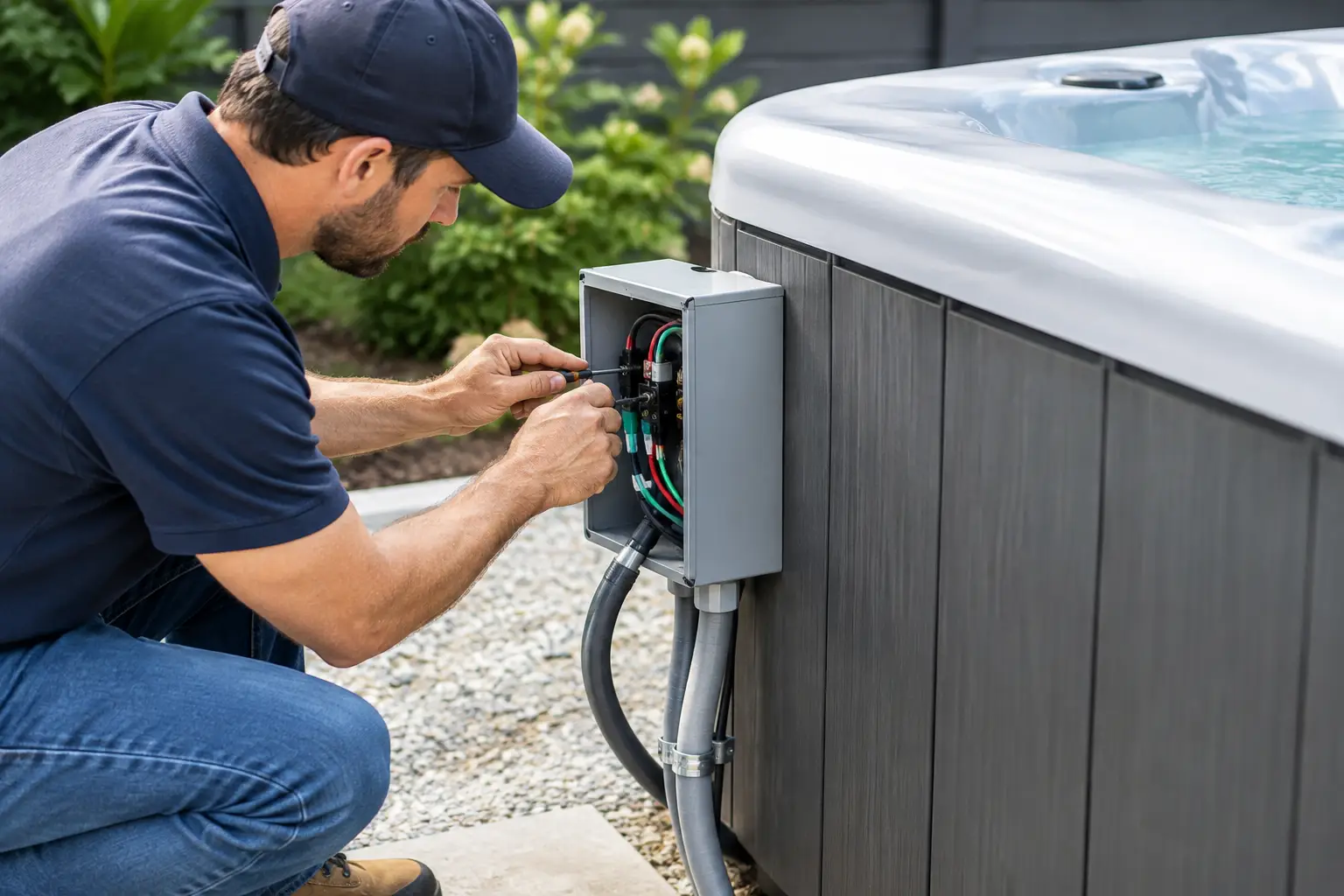
A hot tub can turn a South Texas backyard into the place everyone wants to be after a long day. But before the water is warm and the jets are running, the electrical installation has to be right. Knowing how to wire a hot tub starts with understanding that this is not a typical outlet project. Water, high-voltage equipment, buried wiring, and local code requirements all come together here.
For most homeowners, the safest plan is to understand the installation process well enough to make informed decisions, then have a qualified electrician complete the electrical work. A properly wired spa protects the people using it, prevents nuisance breaker trips, and helps protect expensive equipment from damage.
How to Wire a Hot Tub: Start With the Manufacturer
Every hot tub has specific electrical requirements listed on its data plate and in its installation manual. Those requirements control the design of the circuit. Never assume that two hot tubs need the same setup just because they look similar or have similar seating capacity.
Many full-size, hardwired hot tubs use a 240-volt dedicated circuit, often with a 50-amp or 60-amp breaker. Smaller plug-in models may operate on a 120-volt, 15-amp or 20-amp circuit. The number on the breaker is only one part of the equation. The required wire size, number of conductors, disconnect configuration, and GFCI protection must all match the manufacturer instructions and applicable electrical code.
A licensed electrician should verify the hot tub’s voltage, maximum current draw, wiring diagram, and required overcurrent protection before work begins. If the spa includes a heater, pumps, lighting, a blower, or an audio system, its electrical demands may be higher than a homeowner expects.
A Hot Tub Needs a Dedicated Circuit
A hot tub should not share a circuit with patio lights, outdoor receptacles, pool equipment, or any other load. It needs a dedicated circuit that begins at the home’s electrical panel and serves only the spa equipment.
This matters because hot tubs can draw substantial current, particularly when the heater and pumps operate at the same time. Sharing that circuit can overload wiring, cause repeated tripping, or create a serious fire risk. A dedicated circuit also makes troubleshooting clearer if the spa develops an issue later.
Before installing the circuit, an electrician evaluates the existing panel. Some homes have enough capacity for a hot tub circuit, while others may need additional space, a subpanel, or a service or panel upgrade. This is especially common in homes that have added air conditioning equipment, an EV charger, a generator connection, or major appliances over time.
GFCI Protection Is Not Optional
Ground-fault circuit-interrupter protection is one of the most important safety measures in a hot tub installation. A GFCI monitors the electrical current flowing through the circuit. If it detects a small imbalance that could indicate electricity is traveling somewhere it should not, such as through water or a person, it disconnects power quickly.
Most hardwired hot tubs require a GFCI circuit breaker installed in the electrical panel. A spa disconnect may also include GFCI protection depending on the equipment and installation design. The exact configuration should follow the manufacturer’s instructions and local code requirements.
A GFCI that trips is not something to bypass or repeatedly reset without investigation. It can be caused by moisture in equipment, a failing heater element, a damaged wire, an incorrectly connected neutral, or another electrical fault. A qualified electrician can identify whether the problem is in the hot tub, the disconnect, the wiring run, or the panel.
The Required Outdoor Disconnect
Hardwired spas generally require a disconnecting means within sight of the hot tub and at least 5 feet away from the water. This allows the equipment to be shut off quickly for service or in an emergency while keeping the switch far enough from the water to reduce risk.
The disconnect is not merely a convenient switch. It is a safety device, and placement matters. It must be readily accessible, suitable for the outdoor environment, and installed where a person working on the equipment can see the spa. An electrician will also consider practical details, such as whether landscaping, fencing, deck features, or future patio improvements could block access.
Wiring From the Panel to the Spa
The route from the electrical panel to the outdoor disconnect should be planned before trenching, framing, or pouring a pad. Depending on the home and the hot tub location, wiring may travel through an attic, crawlspace, wall cavity, conduit on an exterior wall, or underground conduit.
Outdoor and underground portions of the installation need materials rated for their environment. Conductors and conduit must be protected from physical damage, moisture, sunlight, and corrosion. Underground wiring has burial-depth rules, and the depth can vary based on the wiring method and location. A shallow trench or improper conduit may lead to failed inspections, damaged conductors, or dangerous future digging hazards.
At the disconnect and hot tub control pack, each conductor must be landed precisely where the manufacturer specifies. Many spas require two hot conductors, a neutral, and an equipment grounding conductor. Even when a neutral is not used by a particular model, the circuit design must still follow its wiring diagram. Guessing at terminals or relying on wire color alone is unsafe.
Grounding and Bonding Are Different, and Both Matter
Homeowners often hear the terms grounding and bonding used together, but they serve different purposes. Grounding provides a path intended to help protective devices operate during a fault. Bonding connects conductive components so they remain at the same electrical potential, reducing the chance of dangerous voltage differences around the spa.
A hot tub installation may require bonding of metallic parts associated with the spa area, such as certain equipment, structural metal, or nearby conductive surfaces. Requirements can depend on the hot tub design, the materials used around it, and whether it is installed indoors or outdoors.
This is one reason hot tub wiring is not a good place for shortcuts. A spa may appear to operate normally even when grounding or bonding is incomplete. The real safety test is not whether the jets turn on. It is whether the system will respond safely under fault conditions.
Permits and Inspections Protect the Installation
Electrical permits and inspections are a practical layer of protection, not unnecessary paperwork. They help confirm that the circuit capacity, wire sizing, GFCI protection, disconnect placement, grounding, bonding, and installation methods meet current requirements.
In San Antonio and surrounding South Texas communities, permit requirements can vary based on the property and jurisdiction. An experienced electrician can determine what applies to the project and coordinate the work so the installation is ready for inspection. This can also prevent headaches when selling a home or making insurance-related repairs after a loss.
Common Hot Tub Wiring Mistakes to Avoid
The most common problems are rarely dramatic at first. They often begin with a circuit that is undersized, a missing neutral where one is required, a disconnect installed too close to the spa, or improper GFCI connections. Using indoor-rated materials outdoors, running unprotected cable where it can be damaged, and skipping bonding requirements are also serious concerns.
Another mistake is installing the hot tub first and thinking about electrical access afterward. The spa’s final location should leave room for the disconnect, service access to the control panel, and a safe path for wiring. If the tub is pushed tight against a wall, fence, or deck structure, future repairs may become much more difficult.
When to Call an Electrician
Call a licensed electrician before delivery if you are buying a new hot tub, relocating an existing one, converting a plug-in spa to a hardwired model, or upgrading a patio or deck around the unit. It is also time for a professional evaluation if the breaker trips, the disconnect shows corrosion or heat damage, lights flicker when the spa starts, or you are unsure whether the existing circuit was installed correctly.
A clear electrical plan gives you confidence before the hot tub arrives and avoids last-minute changes when installers are on site. Jireh Electric can assess the panel, plan the circuit route, explain the required safety equipment, and complete the installation with the care your home deserves.
The best hot tub wiring is the kind you never have to think about: protected, code-conscious, accessible for service, and ready whenever it is time to relax.