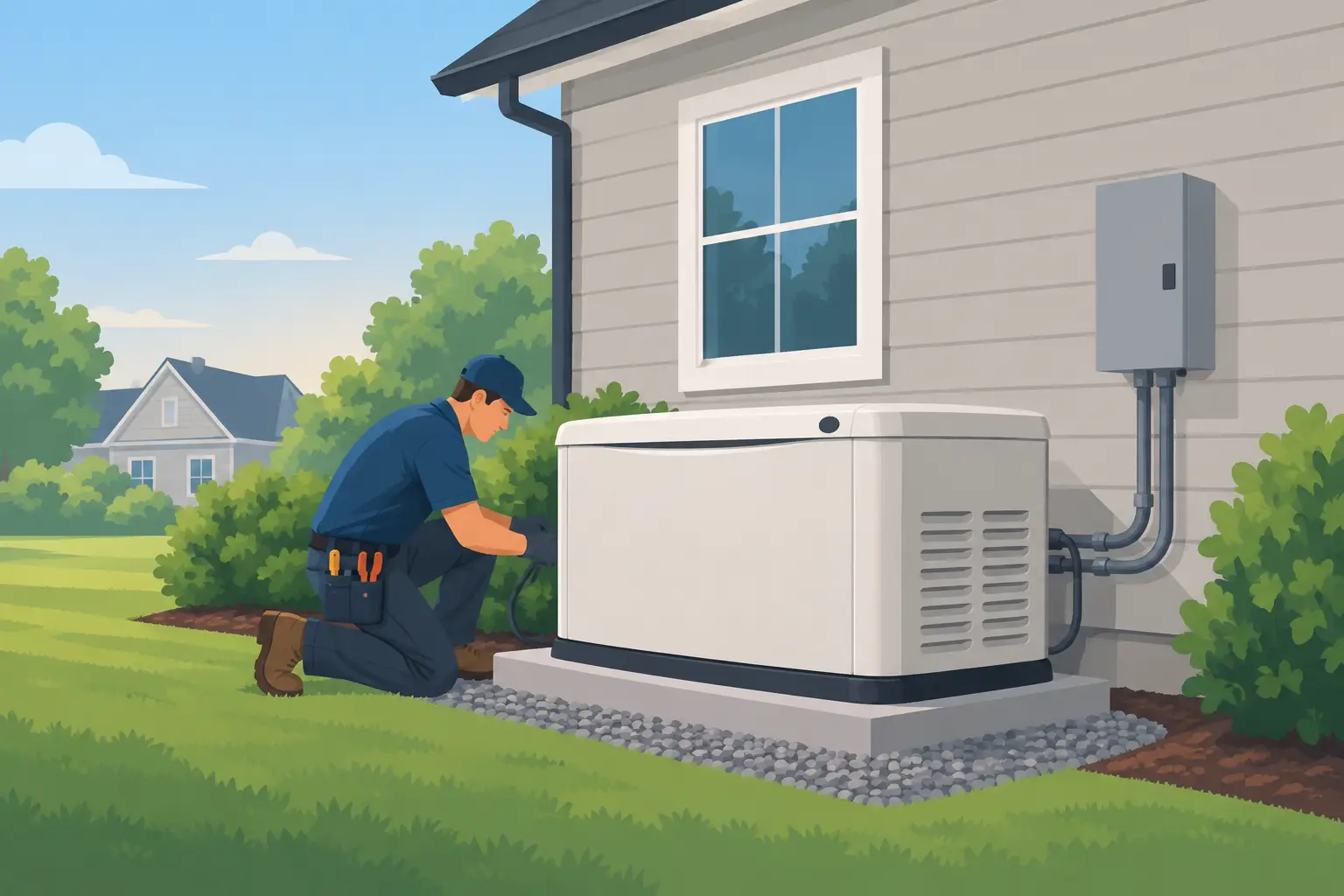
A power outage is more than an inconvenience when it shuts down air conditioning during a South Texas heat wave, spoils refrigerated food, interrupts medical equipment, or leaves a security system offline. A properly planned home standby generator installation gives your household a dependable source of backup power without running extension cords through the house or refueling a portable unit in bad weather.
The key word is properly. A standby generator is connected to your electrical system, fuel source, and utility service. It must be sized for the home, placed safely, permitted where required, and tested as a complete system. The goal is not simply to make power. It is to restore the parts of your home that matter most when utility power goes out.
What a Standby Generator Does Differently
Unlike a portable generator, a home standby generator is permanently installed outdoors and starts automatically when it senses a utility outage. It works with an automatic transfer switch, which safely separates your home from the utility grid before generator power is supplied.
That separation is essential. Without an approved transfer switch, generator power can backfeed into utility lines. This creates a serious hazard for utility workers and can damage electrical equipment when normal service returns. A professional installation prevents that risk while making the transition to backup power controlled and automatic.
Most standby systems run on natural gas or propane. Because the unit draws from a dedicated fuel supply, homeowners do not need to go outside to connect cords, start an engine, or manage gasoline during an outage. The generator monitors utility power, starts when needed, and shuts down after stable utility power is restored.
Start With the Loads You Need to Protect
Generator size is not determined by square footage alone. It depends on what you want the system to operate at the same time. A smaller system may cover selected essentials, while a larger system can support most or all of the home.
For many households, essential loads include refrigeration, a few lighting circuits, internet equipment, garage access, a security system, and selected outlets. In San Antonio, air conditioning is often part of the conversation as well. Running a central AC system, electric water heater, pool equipment, electric range, or multiple large appliances requires significantly more capacity than powering basic essentials.
A qualified electrician evaluates both running wattage and starting demand. Motors in air conditioners, refrigerators, pumps, and some appliances can draw a higher amount of power when they start. If the generator is chosen only by adding appliance labels or making rough assumptions, it may be undersized for real-world use.
There is also a practical question: Do you want whole-home coverage or a managed essential-load system? Whole-home backup offers broader convenience, but it may require a larger generator, additional electrical upgrades, and careful load management. An essential-load design focuses power on the circuits that protect comfort, safety, and daily function. Neither choice is automatically right. It depends on the home, the equipment in it, and how your family plans to live during an outage.
The Electrical Work Behind Home Standby Generator Installation
A complete home standby generator installation includes far more than setting a generator on a concrete pad. The electrical portion usually involves an automatic transfer switch, new wiring between the generator and electrical service equipment, appropriate overcurrent protection, grounding and bonding, and labeling for safe operation and future service.
The location of your existing electrical panel matters. Some homes have panels with limited space, aging equipment, or service capacities that were not designed for a major backup-power addition. In those cases, a panel upgrade, service modification, or a dedicated emergency-load panel may be the best path forward.
An experienced electrician should inspect the panel rather than assume every system can accept a generator connection as-is. This is especially important in older homes, remodeled properties, and homes that have added high-demand equipment such as EV chargers, hot tubs, workshop tools, or a second HVAC system.
The transfer switch itself is a central part of the design. It tells the system whether the home should receive utility power or generator power and prevents both sources from feeding the home at once. Some systems manage loads automatically, temporarily preventing selected high-demand equipment from starting if the generator is already supporting other critical loads. That can allow homeowners to protect more circuits without oversizing the system unnecessarily.
Placement, Fuel, and Permits Need Early Attention
Generator placement affects safety, performance, service access, and code compliance. The unit needs a stable outdoor foundation, required clearances from openings and structures, adequate airflow, and a location that keeps exhaust away from doors, windows, and air intakes. It should also remain accessible for maintenance.
Do not select a location based only on what is least visible from the street. A tucked-away spot may create problems if it lacks clearance, floods during heavy rain, interferes with future landscaping, or makes service difficult. Noise is worth considering, too. Standby generators are designed for residential use, but the location still affects how sound carries to bedrooms, patios, and neighboring properties.
Fuel planning deserves equal care. Natural gas may be convenient where service is available, but the gas line and meter capacity must be evaluated for the generator’s demand alongside existing appliances. A propane system requires correctly sized storage and coordination with the fuel provider. An electrical installation is only as dependable as the fuel supply that supports it.
Permitting and inspections are another reason to involve qualified professionals early. Local requirements can govern electrical work, gas connections, setbacks, and final inspections. Following the process protects the homeowner, supports safe operation, and helps ensure the equipment is installed according to manufacturer requirements and applicable codes.
What to Expect During Installation
The best installations begin with a site visit and a clear conversation. The contractor should ask what you need powered, inspect the electrical service, review generator placement options, and explain whether the system will cover the whole home or selected loads. You should understand the proposed scope before work begins, including which circuits or appliances are intended to operate during an outage.
Once the design is approved, the work may involve preparing the generator pad, coordinating fuel connections, installing the transfer switch, running conductors, modifying the panel as needed, and completing required inspections. The exact schedule depends on permitting, equipment availability, site conditions, and whether fuel or electrical service changes are needed.
Power may need to be turned off for part of the electrical work. A professional crew will explain when that interruption is expected, protect the work area, and leave the installation organized and clearly labeled. At Jireh Electric, that includes taking time to explain what was installed and how the system will behave when an outage occurs.
Testing Is the Moment That Matters
A generator that has never been tested under realistic conditions is not fully ready for an outage. After installation, the system should be commissioned according to the manufacturer’s instructions. That means verifying automatic startup, transfer-switch operation, protected loads, utility restoration, and generator shutdown.
Homeowners should also know what normal operation looks and sounds like. Many standby generators perform scheduled exercise cycles. These brief runs help keep the engine and system ready, but an exercise cycle is not a substitute for periodic professional maintenance or a properly supervised load test.
Keep the generator area clear of stored items, leaves, mulch buildup, and anything that could restrict ventilation. Watch for alerts on the controller and address warning lights promptly. Maintenance intervals vary by manufacturer and usage, but oil, filters, battery condition, and fuel-system performance all deserve attention. A generator is emergency equipment, and emergency equipment needs routine care.
Common Mistakes to Avoid
The most common mistake is choosing a generator before determining the actual electrical loads. The second is assuming an existing panel can handle any new connection without inspection. Another is treating the fuel source as a separate detail rather than part of the same backup-power system.
Homeowners should also avoid trying to power the house through an improvised connection. Never connect a generator to a dryer outlet, range outlet, or panel without an approved transfer method. This is unsafe, can damage equipment, and puts people at risk.
Finally, think beyond the first outage. If you expect to add an EV charger, renovate the home, replace HVAC equipment, or build an outdoor kitchen, mention those plans during the design stage. A generator system can be planned around the home you have now while leaving room for responsible future electrical upgrades.
A standby generator should make an outage feel manageable, not introduce another source of worry. When the system is matched to your needs, installed with care, and maintained for the long term, you can focus on your family or business while your backup power does its job.