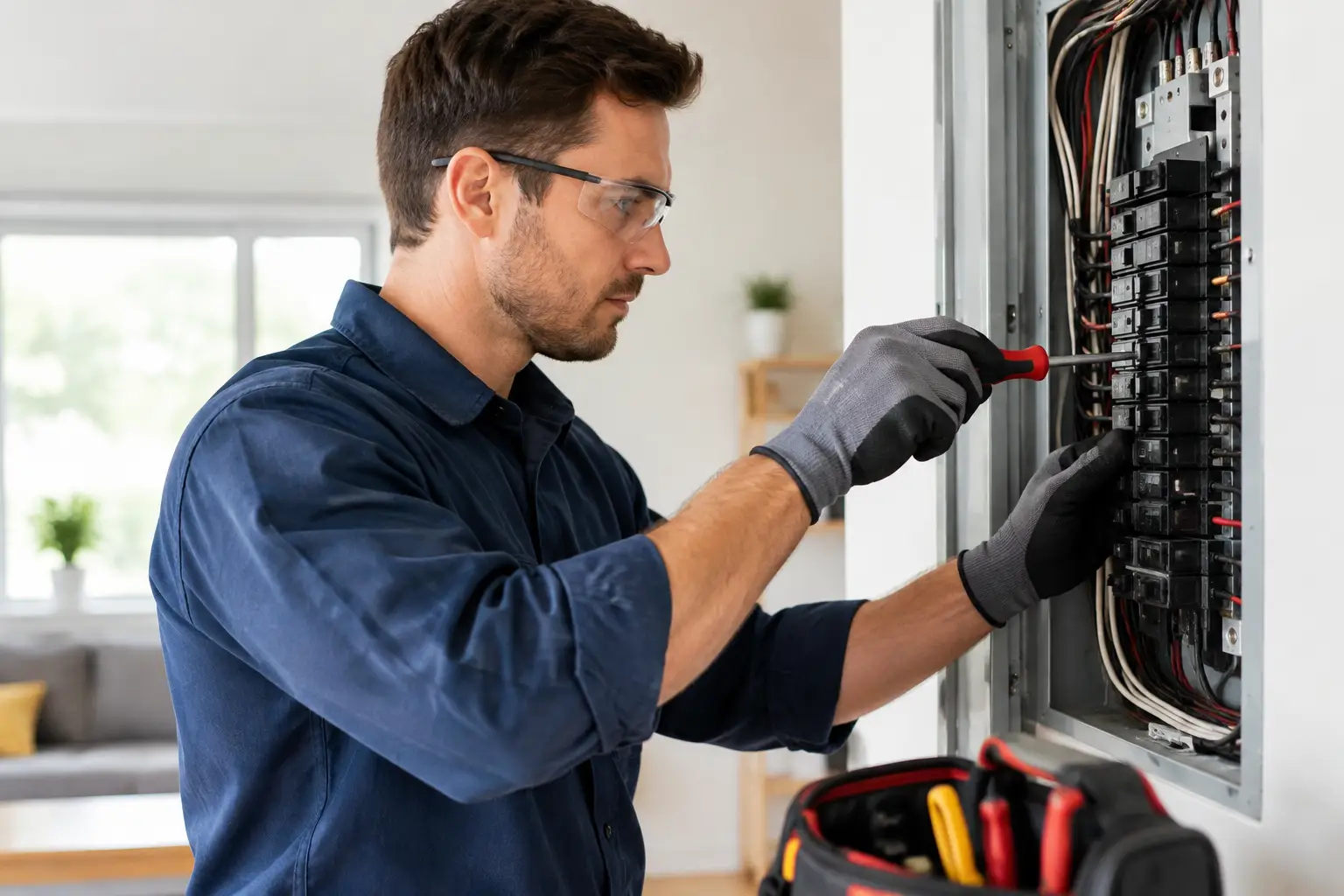
A bedroom outlet stops working. The kitchen lights flicker when the microwave starts. A breaker trips for the second time this week. Home electrical troubleshooting can help you identify what changed and take a safe first step, but it should never mean taking chances with energized wiring.
For homeowners, the goal is not to diagnose every internal electrical fault. It is to recognize the difference between a simple reset and a problem that needs a qualified electrician. That distinction protects your family, your property, and the electrical system that keeps your home running.
Start With the Symptoms, Not the Panel
Before touching a breaker, pay attention to what is and is not working. Is one outlet dead, or is an entire room without power? Did the issue begin after plugging in a space heater, hair dryer, power tool, or other high-demand appliance? Are lights dimming, buzzing, flickering, or unusually warm?
Those details matter. A single nonworking outlet may be related to a tripped GFCI outlet somewhere nearby. Several dead outlets or lights could point to a tripped breaker, a loose connection, or a damaged circuit. If a problem occurs only when one appliance is used, the appliance itself may be faulty or may be overloading the circuit.
Do not ignore signs that suggest heat or arcing. A burning odor, scorch marks, crackling sounds, repeated sparking, a warm outlet cover, or a buzzing panel are not watch-and-wait issues. Turn off power to the affected circuit if you can do so safely, keep people away from the area, and arrange for professional service. If there is smoke, fire, or an immediate threat, call emergency services first.
Safe Home Electrical Troubleshooting Steps
A few homeowner checks are reasonable when there are no signs of heat, damage, water exposure, or sparking. Start by unplugging devices on the affected circuit. This removes the possibility that a single failed or overloaded device is keeping the circuit from operating normally.
Next, check your electrical panel. A tripped breaker does not always sit fully in the OFF position. It may rest between ON and OFF. To reset it, move the breaker firmly all the way to OFF, then back to ON. Stand to the side of the panel rather than directly in front of it, keep your hands dry, and never remove the panel cover.
If the breaker stays on and power returns, plug devices back in one at a time. If the breaker trips after a specific item is connected, stop using that item until it can be inspected or replaced. If the breaker trips again with nothing plugged in, leave it off. That points to a circuit or wiring issue that needs further evaluation.
Check GFCI Outlets in Nearby Areas
Ground-fault circuit interrupter outlets are designed to shut off power quickly when they sense an electrical imbalance. You will often find them in bathrooms, kitchens, garages, laundry rooms, outdoor areas, and near wet locations. One GFCI outlet can protect other outlets farther down the same circuit.
Look for outlets with TEST and RESET buttons, including outlets in adjacent rooms or less obvious spots such as a garage. Press RESET firmly. If it clicks and restores power, test the outlet with a small device or outlet tester. If it will not reset, immediately trips again, or appears damaged, do not force it. Moisture, a failed device, or a wiring fault could be involved.
Rule Out the Simple Causes
Some electrical calls begin with a switch that controls the outlet, a wall timer that was programmed incorrectly, a tripped surge protector, or a bulb that has reached the end of its life. Checking these basics is sensible, especially with a single light fixture or receptacle.
Still, do not mistake a temporary fix for a complete answer. A bulb that burns out unusually often, for example, can be caused by the fixture, the bulb type, vibration from a ceiling fan, or a voltage issue. Repeated problems deserve a closer look instead of another replacement bulb.
When a Breaker Keeps Tripping
A breaker trips because it is doing its job: interrupting power before wires overheat or a fault creates a more serious hazard. The reason may be an overloaded circuit, a short circuit, a ground fault, a failing appliance, or a breaker that is no longer reliable.
Overloads are common in older homes and in rooms that were not designed for today’s electrical demand. A portable heater, air fryer, toaster oven, coffee maker, and microwave can place a surprising load on kitchen or general-use circuits. In South Texas, high air-conditioning demand can also expose limits in an aging electrical system.
The practical response is not to install a larger breaker or repeatedly reset the same one. Breaker size must match the wire size and circuit design. Changing it without evaluating the wiring can create a fire risk. A licensed electrician can determine whether the circuit needs repair, redistribution of loads, dedicated circuits, or a larger electrical upgrade.
Flickering Lights Are Not Always a Minor Annoyance
A single light that flickers may have a loose bulb, incompatible LED bulb, failing dimmer, or worn fixture. If multiple lights flicker, especially in different rooms, the cause can be more significant. Loose wiring connections, a failing panel component, or a utility-side issue may be involved.
Pay close attention if lights brighten and dim dramatically when appliances start, or if some lights become very bright while others dim. That can indicate a neutral connection problem, which requires prompt professional attention. Turn off sensitive electronics if possible and avoid using major appliances until the issue has been evaluated.
Outlets That Feel Loose, Warm, or Dead
A plug that slips out of an outlet is more than an inconvenience. Worn receptacles may not hold plugs securely, increasing the chance of poor contact and overheating. Outlet covers should sit flat, and outlets should not move when a cord is inserted or removed.
Warmth, discoloration, buzzing, or a burning smell are immediate warning signs. Do not continue using the outlet, and do not cover it with furniture or try to hide the issue behind a power strip. A qualified electrician can inspect the receptacle, wiring connections, and circuit condition to find the actual cause.
A dead outlet without visible damage may be less urgent, but it still needs a methodical check. It could be controlled by a switch, protected by a GFCI outlet, or connected to a tripped breaker. Once those safe checks are complete, a dead outlet should be inspected rather than opened by a homeowner.
What Not to Do During Electrical Troubleshooting
Electrical work becomes dangerous when a minor symptom leads to improvised repairs. Avoid these common mistakes:
- Do not remove an electrical panel cover or touch exposed wiring.
- Do not keep resetting a breaker that trips repeatedly.
- Do not use extension cords or power strips as permanent replacements for needed outlets.
- Do not replace a breaker with a larger one to stop nuisance trips.
- Do not use damaged cords, loose plugs, or outlets with scorch marks.
It also helps to avoid assuming every issue is inside the house. If neighboring homes are experiencing outages or voltage fluctuations, the utility may need to investigate. A licensed electrician can help distinguish between an interior electrical problem and a service-related concern.
When to Call an Electrician Right Away
Call for professional help promptly when you notice burning odors, smoke, sparking, shocks or tingling from a switch or appliance, a hot panel, frequent breaker trips, water near electrical equipment, or widespread flickering. These are not problems to postpone until a convenient weekend.
You should also schedule an inspection when your home has an older panel, insufficient outlets, frequent dependence on extension cords, recent remodeling, or new high-demand equipment such as an EV charger, hot tub, or major appliance. Electrical systems work best when the panel, wiring, breakers, and outlets are designed for the loads they serve.
For homeowners in San Antonio and South Texas, Jireh Electric provides clear, safety-focused troubleshooting from licensed professionals who explain what they find and what needs to happen next. The right repair starts with identifying the cause, not simply restoring power for the moment.
When something electrical feels different, treat that change as useful information. Turn off the affected circuit when appropriate, note what happened before the issue began, and let a qualified electrician turn those clues into a safe, lasting solution.