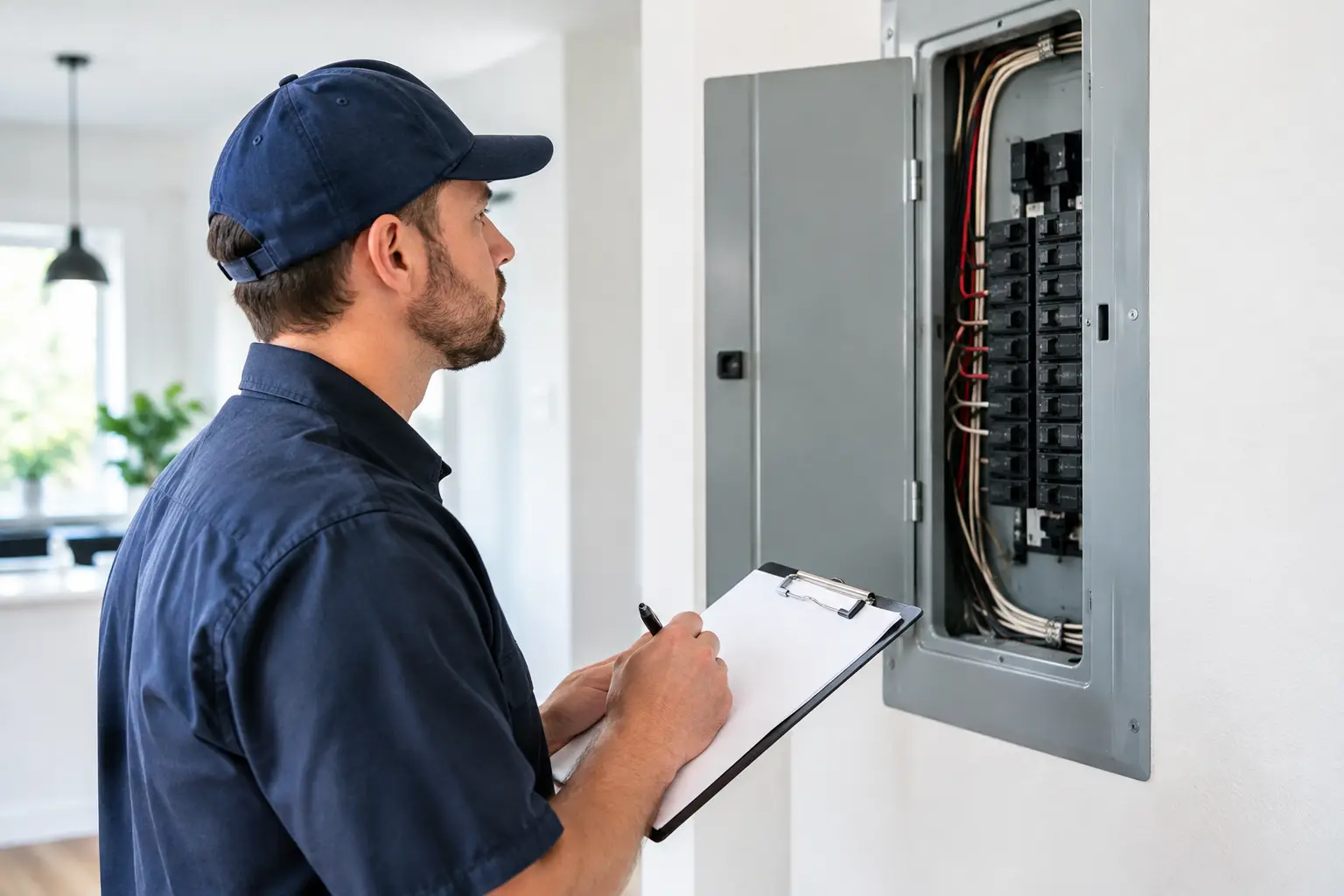
A flickering light may be a loose bulb. A warm outlet, repeated breaker trip, or burning smell is different – those are signals that deserve prompt attention. This electrical safety inspection checklist helps homeowners and property managers spot visible concerns, understand what should be tested by a professional, and make safer decisions before a small electrical issue becomes a disruptive repair or fire risk.
A visual walk-through is useful, but it is not a substitute for licensed electrical work. Never remove a panel cover, touch exposed wiring, or continue using equipment that shows signs of overheating. When something does not look or feel right, turn off power to the affected circuit if you can do so safely and arrange an inspection.
Start With the Electrical Safety Inspection Checklist
Walk through the property in daylight with a flashlight and make note of concerns room by room. The goal is not to diagnose every issue yourself. It is to identify changes, damage, and patterns that help an electrician find the source efficiently.
Check outlets and switches for cracked covers, loose devices, scorch marks, discoloration, buzzing, or warmth. Plugs should fit firmly. A plug that slips out easily can indicate a worn receptacle, while a plug that feels unusually hot points to a problem that should not wait.
Look at cords and power strips as well. Replace cords with frayed insulation, crushed sections, bent prongs, or taped repairs. Extension cords are intended for temporary use, not permanent power for appliances, space heaters, entertainment centers, or workshop equipment. A power strip cannot safely solve a shortage of properly located outlets.
Pay attention to lights. Frequent bulb failures, lights that dim when an appliance starts, fixtures that flicker, and switches that crackle can all be clues. Some causes are simple, such as an incompatible LED bulb or a loose connection at the fixture. Others involve a failing switch, overloaded circuit, or wiring issue behind the wall. The difference requires proper testing.
Inspect the Panel Without Opening It
Your electrical panel is the control center for the property. Homeowners and business operators can inspect its exterior and operation, but the cover should remain in place. Live parts may still be energized even when individual breakers are switched off.
First, make sure the area around the panel is clear, dry, and easy to access. Storage boxes, cleaning supplies, furniture, and outdoor equipment should not block it. In an emergency, every second spent moving clutter matters.
Then review the directory on the panel door. Breakers should be labeled clearly enough to identify the rooms, major appliances, or equipment they serve. Labels such as “lights” or “outlets” are often too vague to be useful. Accurate labeling makes future repairs, renovations, and emergency response safer.
Watch for breakers that trip repeatedly, will not reset, feel warm, or make unusual noises. Do not keep resetting a breaker that trips again. It may be responding correctly to an overload, a damaged appliance, or a fault in the wiring. Unplug devices on that circuit and call a licensed electrician if the breaker continues to trip.
Also check for rust, moisture staining, corrosion, or a loose panel door. In South Texas, heat, humidity, storm exposure, and age can all affect electrical equipment. Water near a panel is a priority concern, especially after a roof leak, plumbing issue, or flood event.
Test GFCI and AFCI Protection
Ground-fault circuit interrupter, or GFCI, protection is designed to quickly shut off power when electricity could travel through water or a person. You will commonly find GFCI outlets in bathrooms, kitchens, garages, laundry areas, outdoors, and near pool or spa equipment. Some circuits may be protected by a GFCI breaker rather than an outlet.
If an outlet has TEST and RESET buttons, use the manufacturer’s instructions to test it. Plug in a small lamp first so you can confirm power is interrupted when the TEST button is pressed, then restored with RESET. If it will not test, will not reset, or has no power afterward, leave it alone and schedule service.
Arc-fault circuit interrupter, or AFCI, protection helps detect certain hazardous arcing conditions that ordinary breakers may not catch. AFCI breakers are generally located in the panel and may have a test button. Because panel equipment involves greater risk, many property owners prefer to have an electrician verify AFCI operation during a safety inspection.
Do not assume every older home has the same protection required in a newer home. Electrical code requirements change over time, and an older system may be safe in some respects while still benefiting from targeted upgrades. A professional can explain which improvements are most relevant to your home, renovation, or intended use.
Check Wet, Outdoor, and High-Demand Areas
Electrical safety deserves extra attention wherever water, weather, or heavy equipment is involved. In kitchens and bathrooms, look for outlets close to sinks, damaged caulk or covers, and appliances with compromised cords. In garages and workshops, confirm that tools, chargers, and compressors are not daisy-chained through multiple extension cords or overloaded power strips.
Outside, inspect receptacle covers, lighting, landscape wiring, and connections for cracks, missing weatherproof covers, exposed cable, or water intrusion. Outdoor outlets should have appropriate protection and covers that close over cords when needed. Pool, hot tub, and spa electrical systems have specialized bonding and protection requirements. Do not attempt repairs in these areas yourself.
Major appliances deserve their own review. Dryers, ranges, HVAC equipment, water heaters, EV chargers, and generators can place significant demand on an electrical system. If a new appliance causes lights to dim, breakers to trip, or outlets to heat up, the circuit or panel capacity may need evaluation. The right solution depends on the equipment, existing load, wiring condition, and future plans for the property.
Know the Warning Signs That Need Fast Service
Some findings should move straight from your checklist to a service call. Turn off power to the affected area when safe, avoid using the equipment, and seek prompt professional help for:
- A burning, fishy, or acrid odor near an outlet, switch, fixture, panel, or appliance
- Smoke, sparks, popping, visible scorch marks, melting plastic, or a shock or tingling sensation
- A breaker that repeatedly trips or an outlet that repeatedly loses power
- Water inside or near electrical equipment, especially after a leak or storm
- Exposed wiring, a damaged service mast, or a downed utility line
For a downed line or an immediate fire risk, stay clear of the area and contact emergency services and the utility provider. Electrical hazards are not always visible, and damaged equipment can remain energized.
When to Schedule a Professional Inspection
A full electrical safety inspection is especially valuable before buying an older property, beginning a remodel, adding a major appliance, installing an EV charger, or opening a commercial space. It is also wise after flood damage, storm damage, a significant power surge, or an unexplained electrical event.
During a professional inspection, a licensed electrician can assess conditions that are not visible from the room. That may include panel capacity, grounding and bonding, wire condition, circuit loading, GFCI and AFCI protection, connections, code-related concerns, and the suitability of the system for planned upgrades. The result should be a clear explanation of what is urgent, what can be planned, and what is simply worth monitoring.
For San Antonio and South Texas property owners, Jireh Electric can help turn a list of concerns into a practical, well-explained plan. A careful inspection is not about finding problems for the sake of it. It is about giving your family, tenants, employees, or customers confidence that the electrical system is being cared for before warning signs become emergencies.
Keep this checklist handy, but trust your instincts as well. If an outlet is hot, a breaker behaves differently, or an electrical smell appears, stop using that circuit and have it checked. Electrical systems usually give warnings before they fail – the safest response is to listen early.