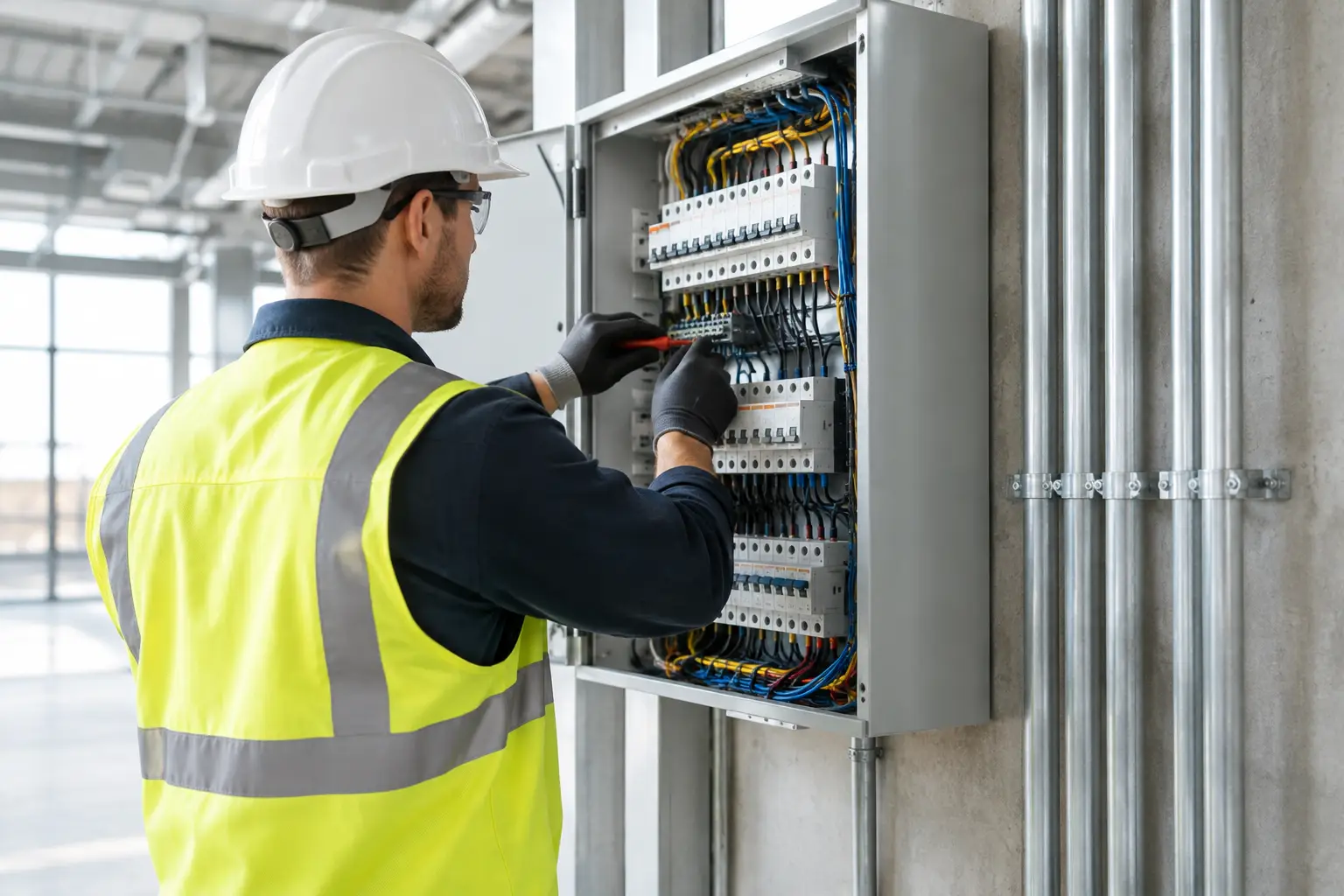
A business can tolerate a lot of small inconveniences. It cannot safely ignore a breaker that keeps tripping, lights that flicker over a work area, warm outlets, or a panel that no longer has room for the equipment the operation depends on. Commercial electrical contracting is about solving those problems with a clear plan – before they disrupt employees, customers, inventory, or daily operations.
For business owners and property managers, electrical work is rarely just an electrical issue. It can affect safety, productivity, tenant comfort, technology, security, and the ability to open the doors each morning. The right contractor brings technical skill, but also communication, dependable scheduling, and respect for the fact that your facility has work to do.
What Commercial Electrical Contracting Covers
Commercial electrical contracting includes the installation, repair, maintenance, and upgrade of electrical systems in offices, retail spaces, restaurants, warehouses, medical and professional facilities, multifamily properties, and other business environments. The exact scope depends on the building and how it is used.
A small office may need a new dedicated circuit for equipment, better task lighting, added outlets, or data and communications wiring. A growing retail business may need an electrical panel upgrade, new exterior lighting, security wiring, or repairs that can be completed with minimal interruption to customers. A warehouse may require higher-capacity circuits, safer lighting coverage, equipment connections, and troubleshooting for recurring power issues.
The work may be straightforward, but the planning should never be casual. Commercial systems often serve more people, more equipment, and more interconnected functions than a typical home. A qualified electrician considers the existing load, available capacity, code requirements, future expansion, access to equipment, and how the work can be completed safely around your operations.
When Your Facility Needs an Electrical Evaluation
Some electrical needs are obvious, such as a power loss or damaged equipment. Others develop slowly and become easy to overlook until a failure forces the issue. If a breaker trips repeatedly, it is doing its job by responding to an overload, fault, or other condition. Resetting it over and over is not a solution.
Frequent flickering, buzzing fixtures, outlets that feel warm, burning smells, discolored receptacles, and shocks from equipment all deserve prompt attention. So do power disruptions that affect point-of-sale systems, network equipment, refrigeration, climate controls, security systems, or production equipment. In a commercial setting, a single electrical fault can quickly become a safety concern and an operational problem.
An evaluation is also wise when a business changes how it uses a space. Adding workstations, upgrading machinery, renovating a tenant suite, installing EV chargers, expanding security coverage, or introducing new lighting can increase electrical demand. The existing infrastructure may be sufficient, or it may need a targeted upgrade. That answer should come from an on-site assessment, not assumptions based on what worked in the building years ago.
Planning Electrical Work Around Business Operations
Good commercial electrical contracting starts with questions that go beyond the immediate repair. What equipment is affected? Is there a safe temporary workaround? Are there customer-facing hours to avoid? Does the work require a planned shutdown? Are there critical systems that need to remain energized?
These details shape the project. A repair in an empty storage area may be handled differently than work in a busy restaurant kitchen, an occupied office, or a retail checkout area. The safest approach may require shutting down a circuit, isolating equipment, or scheduling work outside peak hours. Sometimes a quick repair is appropriate; other times, the responsible choice is a broader correction that addresses the cause rather than the symptom.
Clear explanations matter here. Business owners should understand what the electrician found, what work is recommended, and what effect the repair or upgrade will have on the facility. Technical terms have their place, but they should not replace a straightforward conversation about safety, timing, and the next step.
Repairs, Upgrades, and New Installation Are Different Decisions
Not every issue calls for a major upgrade. A damaged outlet, faulty switch, failed lighting component, or loose connection may have a focused repair. When the issue involves an overloaded panel, outdated equipment, inadequate circuit capacity, or repeated failures, a larger improvement can make more sense.
New installation work requires another level of coordination. Whether the project involves lighting, wiring for a remodel, dedicated circuits, emergency power equipment, communications cabling, or security-alarm wiring, the layout should support the way people actually use the space. Outlet locations, switch placement, lighting levels, equipment clearances, and access for future service all affect the finished result.
A contractor should be willing to explain the trade-offs. The least disruptive option is not always the most durable one, and the biggest upgrade is not automatically necessary. The right recommendation fits the condition of the building, the demands of the business, and the plans for the space.
Safety and Code Compliance Protect More Than the Building
Electrical code requirements are designed to reduce risks such as shock, fire, overloads, and equipment damage. In commercial properties, compliance also helps create a safer environment for employees, tenants, customers, and service providers who enter the space every day.
That includes proper grounding and bonding, correctly sized wiring and overcurrent protection, safe panel configurations, GFCI protection where required, secure connections, and appropriate equipment installation. Work involving additions or renovations may also require permits and inspections, depending on the project and local requirements.
Code compliance should not be treated as paperwork that happens after the real work. It is part of doing the real work correctly. A professional electrician evaluates the system as a whole and does not treat a visible problem as isolated when it may point to a larger concern.
Lighting, Power, Data, and Security Need to Work Together
Modern facilities rely on more than standard outlets and overhead fixtures. Lighting affects visibility, safety, comfort, and energy use. Dedicated circuits protect sensitive or high-demand equipment. Data cabling supports communications, point-of-sale systems, cameras, phones, and connected devices. Security and alarm wiring can be central to protecting the property after business hours.
These systems work best when they are planned together. For example, a remodel is an opportunity to consider lighting coverage, workstation power, network access, camera locations, and future equipment needs before walls are closed. Waiting until after construction can limit options and create unnecessary disruption.
Energy-efficiency improvements also deserve a practical look. Updated lighting or controls may improve visibility and reduce wasted energy, but the best choice depends on the facility’s hours, ceiling heights, tasks performed, and existing electrical infrastructure. A careful assessment prevents a one-size-fits-all recommendation.
What to Expect From a Dependable Electrical Contractor
Commercial clients need more than someone who can install a component. They need a contractor who arrives prepared, communicates clearly, keeps the work area orderly, and treats the property with respect. That is especially important when work takes place around employees, customers, tenants, or valuable equipment.
Look for a licensed electrical professional who can assess the issue on site, explain the findings in plain language, and provide a defined scope of work. For urgent situations, responsiveness matters. A power problem after hours or an unsafe electrical condition should not leave a business guessing about what to do next.
It also helps to work with an electrician who can support both immediate needs and long-term improvements. A contractor who handles troubleshooting, panel work, wiring, lighting, surge protection, generator connections, data systems, and safety inspections can understand how one project affects the rest of the facility.
For San Antonio and South Texas businesses, Jireh Electric provides commercial electrical service with the same focus on safe workmanship, clear communication, and respectful service that property owners expect when they invite a professional onto their site.
A well-maintained electrical system rarely calls attention to itself. The lights come on, equipment runs as expected, employees can do their jobs, and customers experience a space that feels safe and cared for. When something changes – whether it is a warning sign, a renovation, or a growing electrical demand – addressing it early gives your business more control over what happens next.