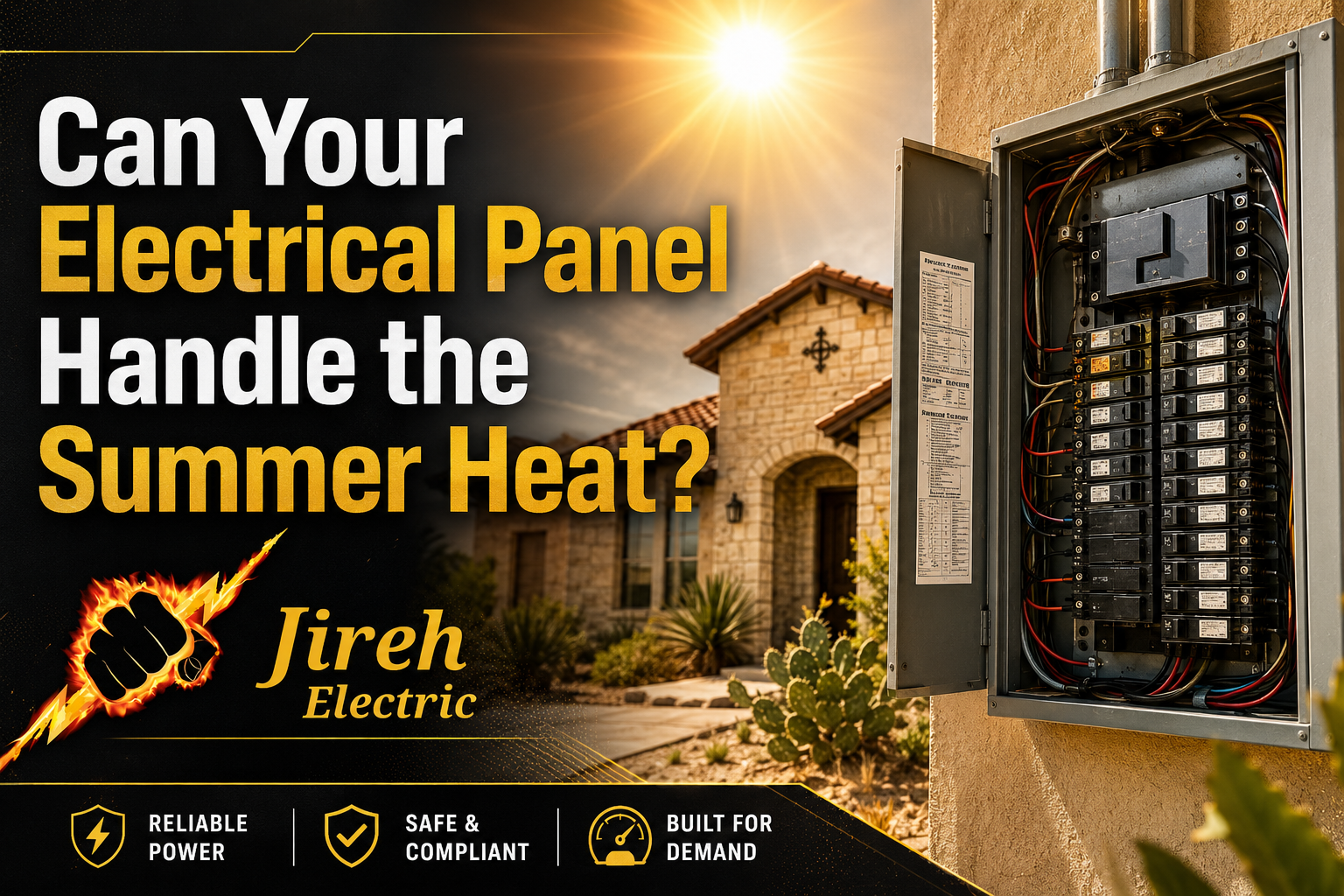
It’s a valid question… Can Your Electrical Panel Handle the Summer Heat?
Summer in San Antonio means long stretches of high temperatures, air conditioners running for hours at a time, ceiling fans working continuously, pool equipment operating daily, and refrigerators and freezers cycling more frequently. While all of these systems help keep your home comfortable, they also place significant demand on your electrical system.
At the center of that system is your electrical panel. It distributes electricity throughout your home and helps protect your wiring, appliances, and family from dangerous overloads. When the panel is outdated, undersized, damaged, or already operating near capacity, the added electrical demand of a South Texas summer may expose problems that were not obvious during cooler months.
If your breakers keep tripping, your lights dim when the air conditioner starts, or your panel feels unusually warm, your electrical system may be telling you that it needs our professional attention.
Jireh Electric provides residential and commercial electrical troubleshooting, repairs, dedicated circuits, panel upgrades, and electrical safety inspections throughout Greater San Antonio and South Texas. Locally owned and operated by Master Electrician Israel Vargas, Jireh Electric helps property owners prepare their electrical systems for the heavy demands of summer.
Why Summer Places More Demand on Your Electrical System
Your home uses electricity throughout the year, but summer can create a noticeable increase in demand. Air-conditioning systems are among the largest electrical loads in many homes. During extended periods of hot weather, an AC system may run frequently and draw substantial power each time the compressor starts.
Your electrical panel may also be supplying power to:
- Ceiling fans
- Portable fans
- Window or portable air-conditioning units
- Pool pumps and filtration systems
- Hot tubs and spas
- Refrigerators and freezers
- Dehumidifiers
- Outdoor kitchens
- Landscape lighting
- Home offices
- EV charging stations
- Workshops and garage equipment
Each device may operate normally on its own. Problems can arise when several high-demand appliances run at the same time, especially in an older home with limited electrical capacity.
A properly designed electrical system should be able to support the needs of the home safely. However, older panels were often installed before homeowners relied on large HVAC systems, multiple televisions, computers, smart appliances, EV chargers, outdoor living equipment, and other modern electrical conveniences.
What Does Your Electrical Panel Do?
Your electrical panel is the main distribution point for electricity entering your home. Power from the utility company reaches the panel and is divided among the circuits that serve your rooms, appliances, lighting, outlets, HVAC equipment, and other electrical systems.
Each circuit is protected by a breaker. A circuit breaker is designed to shut off power when it detects an overload or certain electrical faults. This helps reduce the risk of overheated wiring, equipment damage, and electrical fires.
A breaker that trips occasionally may be responding to a temporary overload. A breaker that trips repeatedly should not be ignored. Constant tripping often means the circuit is overloaded, the breaker is failing, the wiring is damaged, or the connected equipment has an electrical problem.
Repeatedly resetting the breaker without identifying the cause does not solve the underlying issue.
Signs Your Electrical Panel May Be Struggling
Electrical problems are not always dramatic. In many cases, a home provides small warning signs before a major failure occurs.
Breakers Trip When the AC Turns On
A breaker that trips whenever the air conditioner starts is one of the clearest signs that something is wrong. The issue could involve the HVAC equipment, the electrical connection, the circuit, the breaker, or the capacity of the panel.
An air-conditioning system should be connected to a properly sized, dedicated circuit. If the circuit is undersized, improperly installed, damaged, or already overloaded, the breaker may trip to protect the system.
Do not install a larger breaker as a shortcut. Breakers must be correctly matched to the wiring and electrical load. Installing an oversized breaker without upgrading the wiring can create a serious overheating and fire hazard.
One of our licensed electricians should evaluate the circuit and determine why the breaker is tripping.
Lights Flicker or Dim
Do your lights dim when the air conditioner starts? Do they flicker when you use the microwave, vacuum cleaner, or another large appliance?
A slight, momentary change may sometimes occur when a large motor starts, but frequent or severe flickering can indicate loose connections, overloaded circuits, voltage problems, damaged wiring, or insufficient electrical capacity.
Flickering lights should be inspected, particularly when the issue affects several rooms or occurs alongside buzzing sounds, warm outlets, or breaker trips.
The Electrical Panel Feels Warm
Electrical panels may generate a small amount of normal operating warmth, but the panel should not feel hot. Excessive heat can indicate loose connections, overloaded breakers, damaged components, corrosion, or other dangerous conditions.
Never remove the panel cover to investigate the source yourself. Electrical panels contain energized components that can cause severe injury even when individual breakers are switched off.
If your panel feels hot, smells unusual, makes crackling noises, or shows discoloration, contact a licensed electrician promptly.
You Hear Buzzing, Humming, or Crackling
A healthy electrical panel should operate quietly. Buzzing, humming, sizzling, or crackling sounds may indicate loose wiring, electrical arcing, a failing breaker, or another internal problem.
These sounds should never be dismissed as normal. Electrical arcing creates intense heat and may damage wiring or ignite nearby materials.
Turn off major electrical loads when it is safe to do so and contact Jireh Electric for professional service.
You Smell Burning or Melted Plastic
A burning odor near the electrical panel, outlets, switches, or appliances is an urgent warning sign. It can indicate overheated wiring, melting insulation, a loose electrical connection, or a failing breaker.
If you see smoke, sparks, or flames, leave the property and contact emergency services. Do not attempt to open the panel or handle damaged electrical components.
Your Home Still Has a Fuse Box or Outdated Panel
Many older homes in San Antonio and surrounding communities were built with electrical systems that were appropriate at the time but may no longer support modern power demands.
A fuse box or aging electrical panel is not automatically unsafe, but it should be evaluated by a qualified electrician. The condition, capacity, installation quality, maintenance history, and electrical needs of the property all matter.
An electrical panel upgrade may be appropriate when a home is being remodeled, adding major equipment, experiencing frequent breaker trips, or relying on an older system that no longer meets current needs.
Can Your Panel Support a New Air-Conditioning System?
Replacing an older HVAC system can improve comfort and efficiency, but the electrical requirements of the new equipment must be considered before installation.
A new air-conditioning system may require:
- A dedicated electrical circuit
- Correctly sized wiring
- Proper overcurrent protection
- A disconnect near the outdoor unit
- Electrical grounding and bonding
- Sufficient panel capacity
- Code-compliant installation
The electrical panel should be evaluated before the new equipment is connected. An HVAC technician may install the heating and cooling equipment, but a licensed electrician is often needed to complete or verify the electrical portion of the project.
Is Your Panel Large Enough for Your Home?
Can Your Electrical Panel Handle the Summer Heat?
Electrical panel capacity is commonly measured in amperage. Older homes may have smaller services, while many modern homes are built with larger electrical capacity.
However, the number printed on the panel does not tell the entire story. An electrician must also consider the size of the home, major appliances, HVAC equipment, electric water heating, cooking equipment, EV charging, pool systems, additions, workshops, and other electrical loads.
A professional load calculation helps determine whether the existing electrical service can safely support the property.
You may need a panel evaluation if you are planning to add:
- A larger HVAC system
- An electric vehicle charger
- A swimming pool or hot tub
- An outdoor kitchen
- A home addition
- A converted garage
- A workshop
- New commercial equipment
- Electric cooking appliances
- A home generator or transfer equipment
- Additional refrigerators or freezers
Adding circuits without evaluating the total electrical demand can place unnecessary strain on the panel and service.
Why Extension Cords and Power Strips Are Not the Answer
During the summer, homeowners sometimes rely on extension cords and power strips to operate portable air conditioners, fans, outdoor equipment, and other devices.
Extension cords are intended for temporary use and must be rated for the connected equipment. High-demand appliances can overheat an undersized cord, plug, or power strip. Portable air-conditioning units and similar equipment may require a dedicated outlet or circuit.
Never use a power strip as a substitute for permanent wiring. If you do not have enough outlets or circuits, Jireh Electric can install safe, properly located electrical connections.
How Summer Storms Affect Your Electrical System
Summer heat is not the only concern. San Antonio and South Texas can also experience thunderstorms, lightning, utility interruptions, and sudden voltage changes.
A power surge can enter a home through electrical service lines and damage sensitive electronics, appliances, HVAC equipment, security systems, smart-home devices, and other connected equipment.
Plug-in surge protectors may help protect individual devices, but they do not provide the same level of coverage as whole-home surge protection installed at the electrical panel.
Whole-home surge protection can add an important layer of defense for:
- Air-conditioning systems
- Refrigerators and freezers
- Televisions
- Computers
- Wi-Fi equipment
- Smart appliances
- Security systems
- Home automation equipment
- EV chargers
- Pool and spa controls
No surge protection system can prevent every possible type of damage, but a professionally installed whole-home device can help reduce the risk associated with many common surges and voltage spikes. Additionally, when professionally installed, they come with warranties should there be a failure.
Can Your Electrical Panel Handle the Summer Heat and When Is aPanel Upgrade Necessary?
Not every electrical problem requires a complete panel replacement. In some cases, the issue may involve a single breaker, damaged circuit, loose connection, faulty appliance, or improper installation.
A panel upgrade may be recommended when:
- The panel does not have enough capacity
- Breakers trip frequently
- The panel is damaged or corroded
- The home still relies on an obsolete electrical system
- There is no room for necessary new circuits
- The property is being significantly remodeled
- Major electrical equipment is being added
- The existing panel has known reliability concerns
- Wiring and breakers show signs of overheating
- The electrical service no longer meets the needs of the property
One of our licensed electricians should inspect the system and recommend the right solution rather than assuming a full replacement is always necessary.
Benefits of Upgrading Your Electrical Panel
A properly planned panel upgrade can improve the safety, reliability, and functionality of your electrical system.
Potential benefits include:
Greater Electrical Capacity
An upgraded panel may provide the capacity needed for modern HVAC equipment, appliances, EV charging, additions, workshops, pools, hot tubs, and other electrical improvements.
Fewer Overload Problems
Correctly designed circuits and adequate capacity can reduce nuisance breaker trips and help your electrical system operate more reliably.
Improved Safety
Replacing damaged, deteriorated, or outdated equipment can address loose connections, overheating, corrosion, and other electrical hazards.
Room for Future Projects
A panel with available circuit space makes it easier to plan future electrical additions without relying on unsafe shortcuts.
Better Support for Modern Technology
Newer panels can help support smart-home systems, security equipment, networking devices, modern kitchens, home offices, and other technology.
Increased Buyer Confidence
Professional, permitted electrical improvements can be valuable when selling a home. Buyers and inspectors often pay close attention to electrical panels, wiring, and visible code issues.
Can Your Electrical Panel Handle the Summer Heat? Do Not Ignore Electrical Warning Signs!
Electrical problems rarely improve on their own. A breaker that trips today may continue to trip more often as temperatures rise and demand increases. A loose connection may continue to generate heat. A damaged breaker may stop providing reliable protection.
Contact an electrician when you notice:
- Repeated breaker trips
- Flickering or dimming lights
- Warm outlets, switches, or panels
- Burning odors
- Buzzing or crackling sounds
- Scorch marks or discoloration
- Sparks from outlets
- Frequently blown fuses
- Electrical shocks or tingling sensations
- An AC system that loses power
- An electrical panel with visible rust or moisture
- A lack of available circuits for new equipment
Immediate professional attention can help prevent a minor issue from becoming a dangerous or expensive failure.
Prepare Your Electrical System Before the Hottest Weather Arrives
The best time to address electrical problems is before your system is pushed to its limit. Scheduling an electrical evaluation before or early in the summer can help identify overloaded circuits, weak breakers, damaged wiring, and panel capacity concerns.
A summer electrical inspection may include:
- Visual inspection of the panel
- Evaluation of breakers and connections
- Review of panel capacity
- Testing of problem circuits
- Inspection for overheating or corrosion
- Evaluation of grounding and bonding
- Recommendations for dedicated circuits
- Discussion of surge protection
- Planning for future electrical upgrades
The exact work needed will depend on your property and the symptoms you are experiencing.
Trust Jireh Electric for Panel Upgrades and Summer Electrical Problems
When your air conditioner and other high-demand systems are working overtime, you need an electrical system that can support them safely.
Jireh Electric provides professional electrical troubleshooting, repair, installation, maintenance, and panel upgrade services for homes and businesses throughout Greater San Antonio and South Texas. Our company is locally owned and operated by Master Electrician Israel Vargas and is committed to providing dependable workmanship, honest recommendations, and responsive service.
Jireh Electric can assist with:
- Electrical panel inspections
- Panel upgrades and replacements
- Breaker replacement
- Dedicated circuit installation
- Whole-home surge protection
- Electrical troubleshooting and repair
- Indoor and outdoor lighting
- GFCI outlet installation
- Pool and hot tub wiring
- EV charger installation
- Generator electrical connections
- Remodeling and addition wiring
- Residential and commercial electrical services
Schedule an Electrical Panel Evaluation Today
Do not wait for a complete power failure during the hottest part of a San Antonio summer.
If your breakers keep tripping, your lights dim when the AC starts, or you are unsure whether your electrical panel can support your home’s power demands, contact Jireh Electric today.
Call 210-771-0028 schedule professional electrical service.
Jireh Electric proudly serves Greater San Antonio and South Texas with dependable residential and commercial electrical solutions.
Contact us today to schedule your estimate and discover why homeowners and business owners throughout San Antonio trust Jireh Electric for all their electrical service needs.